Observatory in Troodos: How to Visit the Observatory, Tickets and Program
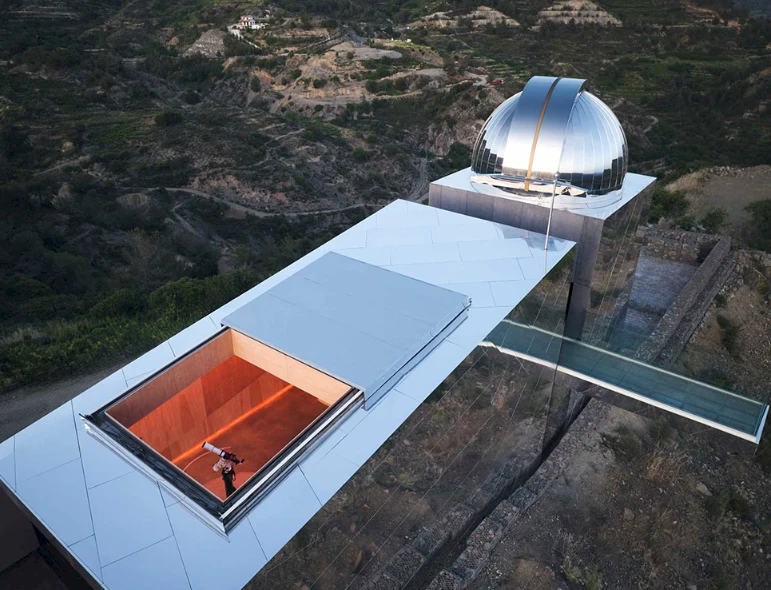
The observatory is located in the area of Agridia village in the Troodos mountains at an altitude of 1,250 m. Basic tickets on the official website: day tour — 7 EUR (students 5 EUR), evening Night session — 20 EUR (students 10 EUR). For families, it is stated: children under 3 — free, second child onwards — free. Telescope observations depend on the weather, so before the trip, it is worth checking the forecast and current slots in the booking section.

Below is a practical guide: how to get there, what visit formats exist, what you will actually see, and what to take with you to the mountains in the evening.
Article Navigation
- Where it is and how to get there
- Tickets and prices
- What to expect during the visit
- When is the best time to go
- What to take with you
- Is it suitable for children
- Useful for the trip
- Contacts
- Glossary
- Frequently Asked Questions
Where it is and how to get there
Troodos Observatory is located in the Agridia area, near the villages of Agros and Kyperounda.
- Official website
Practical tip: the road is mountainous, so allow extra time for serpentine roads. In the evening, it is noticeably colder in Troodos than on the coast, even if it is comfortable by the sea.
Tickets and prices
Current slots and visiting conditions are published in the Book Your Ticket section. Prices and formats may change seasonally and for events.
| Format | Price | What is included |
|---|---|---|
| Day tour (Day) | 7 EUR (students 5 EUR) | Show/presentation in the Cosmotheater, solar observations weather permitting, tour of exhibits, tour of the 0.5 m telescope without night observations, viewing points |
| Evening session (Night) | 20 EUR (students 10 EUR) | Mini-lecture on observation basics and upcoming celestial events, practice with telescopes/binoculars, tour of the 0.5 m telescope dome and observations weather permitting |
| Family conditions | per website rules | Children under 3 — free; second child onwards — free |
| Special events | according to schedule | Separate formats (e.g., themed evenings); conditions are specified in the booking |
Important: the booking page sometimes features the note "Booking starts in July" for specific formats. This means that specific dates/slots may open seasonally — check availability when planning.
What to expect during the visit
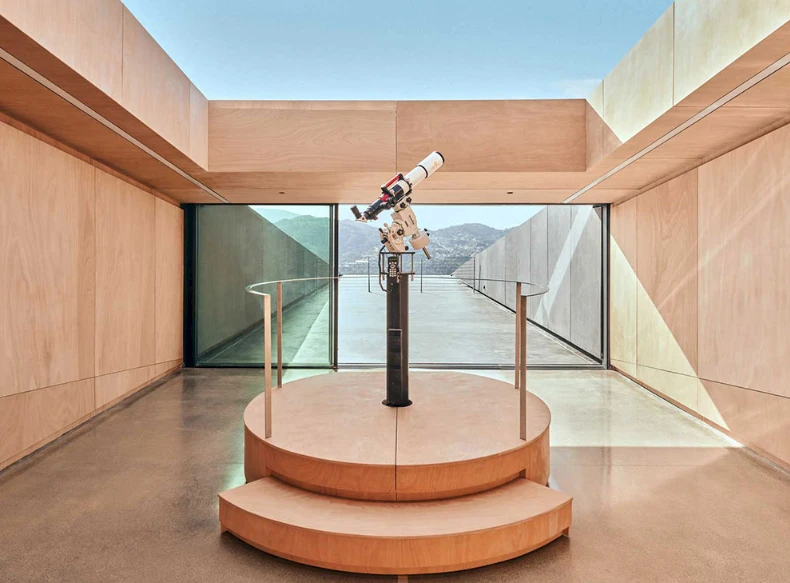
Troodos Observatory usually structures the program to "tune your vision": first a short explanation of exactly what you are seeing and why, and then practice at the telescopes.
- Night (evening): mini-lecture on observations and upcoming celestial events, practice with telescopes/binoculars, tour of the main telescope dome and observations (weather permitting).
- Day (day): educational part (show/presentation), solar observations weather permitting, tour of exhibits and infrastructure.
Equipment claimed by the observatory: 0.5 m Planewave Astrograph and 100 mm Hydrogen-Alpha Lunt (for solar observations).
Where to see format descriptions: Experiences and Book Your Ticket.
When is the best time to go
- For the "wow factor" people usually go to evening sessions: planets, the Moon, and deep space objects depend on the season and visibility.
- If you want a darker sky, consider the Moon: a bright Moon (especially close to full moon) "illuminates" the sky and some objects look less contrasting.
- Weather is critical: telescope observations depend on cloud cover and wind. The rules and descriptions use the wording *weather permitting*.
What to take with you
- Warm outer clothing: it is cooler in the mountains in the evening than by the sea.
- Closed comfortable shoes: the terrain and access road are mountainous.
- Water and a light snack: if you are going for an evening slot and returning late.
- Minimum bright light: if you take a flashlight, preferably one with a red mode (does not "kill" eye adaptation to darkness).
Is it suitable for children
Yes, but it is better to choose a format according to age and expectations. Family conditions (including free entry for children under 3) are specified on the booking page. Practically, it is easier for children to "get into" the format if you explain in advance that they take turns at the telescope and part of the program depends on the weather.
Useful for the trip
- If you don't want to plan the route yourself, sometimes it is more convenient to choose a ready-made trip with a guide and transfer: options for excursions and activities.
- If you plan to drive up to Troodos in the evening and not depend on schedules, car rental might be useful: compare rental options.
- If you don't want to drive on serpentine roads or return late behind the wheel, you can look up transfers in advance: transfer options.
- For activities and trips to the mountains, some prefer to take out travel insurance: select a policy.
Contacts
- Phone: +357 25 314556
- Email: [email protected]
- Contact Page: Contact Us
Glossary
- Troodos Observatory — an observatory in the Troodos mountains (Republic of Cyprus), located in the Agridia area at an altitude of 1,250 m.
- Night Ticket — evening format with an introductory part and telescope observations weather permitting.
- Cosmotheater — educational part of the day format (show/presentation) at the observatory venue.
- Weather permitting — observations are possible under suitable weather conditions (no clouds/fog and strong wind).
Frequently Asked Questions
Are telescope observations guaranteed?
No. The format description uses the condition *weather permitting*: part of the observations depends on the weather.
Do I need to book in advance?
Yes, it is better to book via the official Book Your Ticket section, especially for weekends and special events.
Can I visit during the day?
Yes. The website has a day format (Day) with an educational part and solar observations weather permitting.
How much are tickets?
Basic prices on the official website: Day — 7 EUR (students 5 EUR), Night — 20 EUR (students 10 EUR). Conditions for families and special events are published in the booking.
Where is the observatory located?
In the Agridia area (Troodos), at an altitude of 1,250 m. See the How To Get Here page for the exact route map and landmarks.
Author

I am a person who is not afraid to change life when my heart tells me that something greater lies ahead. I am originally from Belarus. I have journeyed from pedagogical and economic education to the financial sector and many years of work in logistics — a world where everything moves, changes,…