Colors of Waste Bins for Separate Waste Collection — Republic of Cyprus
In the Republic of Cyprus, bin colors typically signify the following: blue — PMD (plastic and metal packaging, as well as drink cartons), brown — paper and cardboard, green "bell" — glass bottles and jars, white — waste electrical and electronic equipment (WEEE), separate containers and columns — for textiles, batteries, and hazardous packaging (e.g., from pesticides). The markings on the container are more important than the color: look for the labels PMD, Paper, WEEE, AFIS, and the name of the operating organization.
- Bin types and colors
- Blue containers (PMD)
- Brown containers (paper)
- Green bell containers (glass)
- Brown-green containers (PASYKAF)
- Purple containers (Anakyklos Perivallontiki)
- White containers (WEEE)
- Blue barrels (lamps)
- Orange containers (hazardous packaging)
- Battery containers (AFIS)
- Glossary
- Frequently Asked Questions
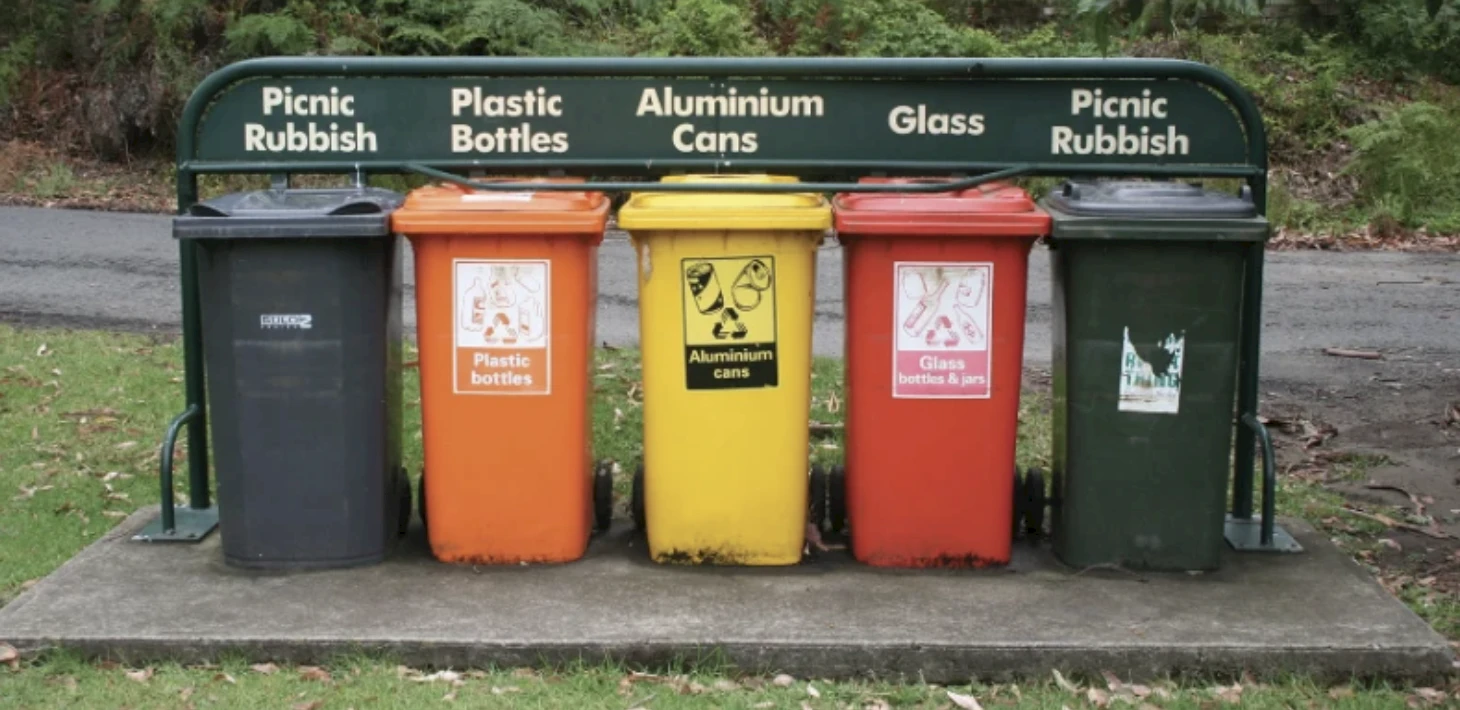
Types and colors of trash bins in the Republic of Cyprus
In cities and villages across the Republic of Cyprus, you will encounter containers of various colors and shapes. If you are in doubt, check the markings and pictograms on the bin itself: they indicate the waste category and any restrictions.
If you need a general overview of the logic behind separate collection, it is also helpful to review the material on sorting and recycling waste in the Republic of Cyprus.
Blue containers
Blue containers are usually marked PMD (Plastic packaging, Metal packaging, Drinks cartons). The following should be placed here:
- plastic packaging (bottles, flasks, packaging from household chemicals, etc.);
- metal packaging (cans, metal containers);
- drink cartons (such as Tetra Pak and similar).
Important: this refers specifically to packaging. If an item is not packaging (for example, toys or plastic utensils), it generally does not belong in the PMD category unless otherwise specified on the container.
Brown containers
Brown containers are intended for paper and cardboard (markings such as Paper/Paper & Cardboard may vary). Typically, this includes:
- newspapers, magazines, brochures;
- office paper and flyers;
- cardboard food boxes.
Common exceptions (usually not accepted as "clean paper"):
- wet wipes, toilet paper, paper towels;
- coated wrapping paper (e.g., foiled/laminated);
- stickers and paper with a strong adhesive layer;
- drink cartons (these belong to PMD and go in the blue container).
Green bell containers
Green "bells" are intended for glass containers (usually bottles and jars). As a rule, the following should not be placed here:
- light bulbs;
- window glass;
- glassware (including heat-resistant glass), as well as porcelain, earthenware, and ceramics;
- broken glass, if a specific restriction is noted on the container (follow the local rules).
Brown-green containers
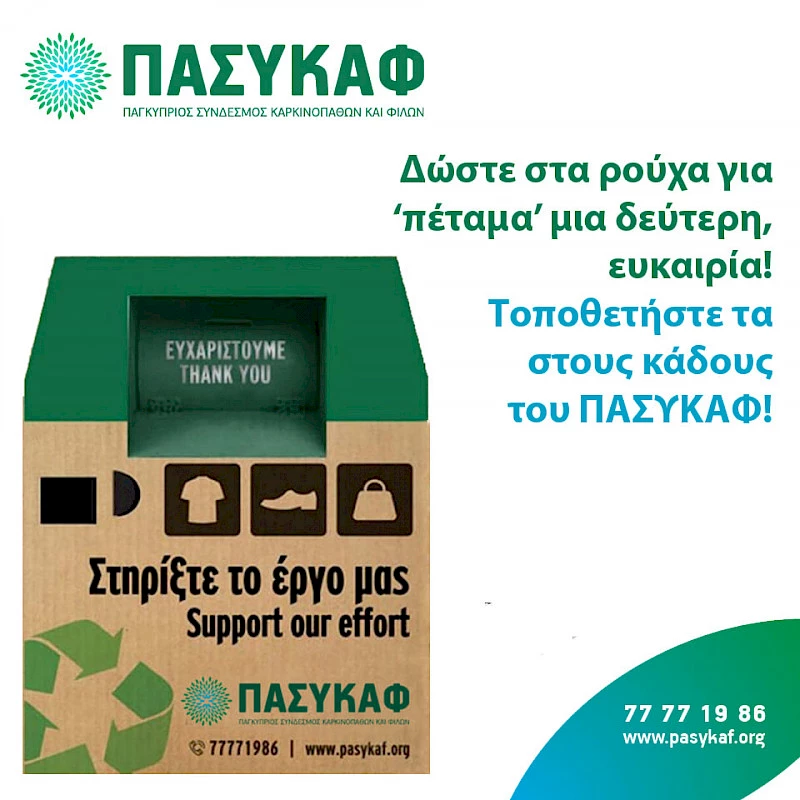
These collection points are usually intended for clothing, shoes, and accessories. The containers often feature the name of the organization PASYKAF (associated with charitable initiatives). Items are accepted in a condition suitable for reuse or sorting (please pack them in closed bags).
Purple containers
Purple containers also accept textiles (clothing and other fabric items). The operator may vary: it is often Anakyklos Perivallontiki. The practical rule is the same: items should ideally be placed in bags, and wet or heavily soiled textiles are generally not suitable.
White containers
White containers marked WEEE (Waste Electrical and Electronic Equipment) are designed for the collection of electrical and electronic equipment. Usually, these accept:
- small household appliances and electronics;
- power tools and measuring instruments;
- certain types of lamps (depending on the container and operator).
These containers are often located near electronics stores or electrical equipment collection points.
Blue barrels
Blue barrels (standalone cylindrical containers) may be intended for lamp collection. The specific list of accepted lamps depends on the local markings: follow the pictograms and text on the container, as rules may differ between collection points.
Orange containers
Orange containers are intended for waste related to toxic chemicals (for example, empty containers from pesticides and other agrochemicals). These containers are usually placed near shops where such products are sold. Only deposit what is specified on the container and follow all safety warnings.
Battery containers
Containers or columns shaped like batteries are intended for the collection of household batteries and small accumulators. In the Republic of Cyprus, there is a typical weight limit: up to 2 kg per deposit (refer to the rules of the specific container). These points are frequently found in supermarkets, banks, schools, and other public places.
Glossary
- PMD — a category of packaging for separate collection: Plastic packaging, Metal packaging, Drinks cartons.
- WEEE — waste electrical and electronic equipment (electronics and household appliances turned in at specialized containers/collection points).
- Green Dot Cyprus — the operator of the separate packaging collection program (including PMD, paper, and glass categories) in the Republic of Cyprus.
- AFIS — a system for the collection and recycling of household batteries and small accumulators (usually up to 2 kg) in the Republic of Cyprus.
- PASYKAF — an organization whose name is often found on clothing/textile collection containers as part of charitable programs.
- Anakyklos Perivallontiki — an organization that may act as an operator for textile collection containers (markings depend on the region and the specific network).
Frequently Asked Questions about waste in the Republic of Cyprus
Where is waste recycled in the Republic of Cyprus?
It depends on the waste category and the operator: some streams are sorted locally and then sent for recycling through appropriate disposal chains. For certain categories, export for recycling outside the Republic of Cyprus is possible.
What types of waste are typically accepted for recycling?
The most common categories are: PMD (plastic and metal packaging, as well as drink cartons), paper and cardboard, glass bottles and jars, batteries and small accumulators, electrical and electronic equipment (WEEE), and textiles (in separate containers).
Which organizations operate separate collection?
In the Republic of Cyprus, you will find containers and collection points marked Green Dot Cyprus (packaging: PMD, paper, glass), AFIS (batteries and small accumulators), WEEE (electronics and electrical equipment), and textile container operators (such as PASYKAF and Anakyklos Perivallontiki — based on local markings).
Do I need to wash packaging before throwing it into PMD or paper bins?
Generally, it is sufficient for the packaging to be empty and free of food residue or liquids. Heavily soiled packaging and wet paper may be unsuitable for recycling, so they are better disposed of with general waste unless otherwise indicated on the container.
Can I throw broken glass into the green "bell"?
Most "bells" accept whole glass containers (bottles and jars). If the glass is broken, check the instructions on the container or at the nearest collection point: in some locations, broken glass is not accepted for safety reasons.
Where should I take light bulbs and small electronics?
Check the markings: electronics and small devices are usually accepted in WEEE containers, while there may be separate containers/barrels for lamps. These points are often located near electronics or lighting stores.
What should I do if there are several containers of the same color nearby?
Look for the labels and pictograms on the container (PMD, Paper, Glass, WEEE, AFIS, etc.). If the marking is missing or illegible, it is better not to place the questionable waste in the recycling bin to avoid contaminating the stream.
Author

I am a person who is not afraid to change life when my heart tells me that something greater lies ahead. I am originally from Belarus. I have journeyed from pedagogical and economic education to the financial sector and many years of work in logistics — a world where everything moves, changes,…