
Chinese Company Engine AI Plans to Send Humanoid Robot into Space
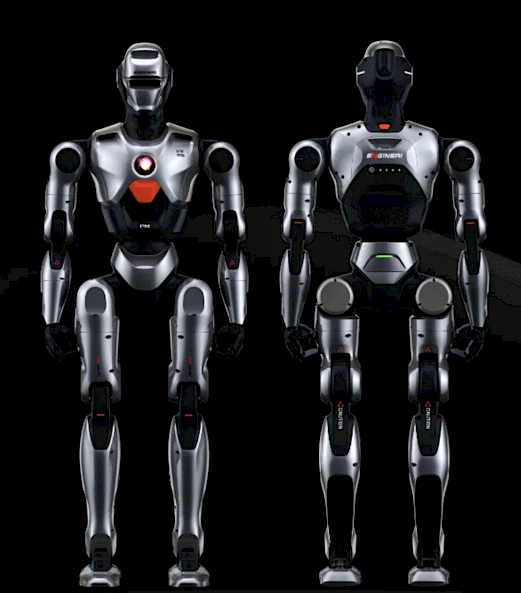
Chinese company Engine AI, specializing in humanoid robot development, announced plans to send a human-like robot into space. The goal of the project is to create the world’s first robotic astronaut.
The Shenzhen-based company reported collaboration with Beijing Interstellar Human Spaceflight Technology as part of the Humanoid Robot Astronaut Exploration Program launch.
The mission will be based on the PM01 humanoid platform — a versatile AI system equipped with high-precision environmental sensors, rapid motor response, and autonomous decision-making capabilities.
Previously, Engine AI reported that PM01 became the first humanoid robot to perform a spin, presented as proof of advanced motor control.
The company emphasizes that space presents much more demanding conditions than any terrestrial environment. The robot will operate in vacuum, microgravity, with extreme temperature fluctuations and high radiation, requiring high stability, adaptability, and autonomy.
To address these challenges, Engine AI will closely cooperate with Interstellar, focusing on enhancing PM01’s reliability in space and its ability to independently perform complex missions.
Engine AI estimates that humanoid robots could outperform humans in several space tasks, including:
- external maintenance of orbital stations,
- work in hazardous zones,
- long-term monitoring in conditions risky for humans.
The use of such robots is expected to significantly reduce risks for crews.
PM01 is a compact humanoid robot designed for research tasks. It is equipped with:
- an interactive central screen,
- biomimetic design,
- a waist capable of 320-degree rotation,
- an exoskeleton made of durable aluminum alloy.
The robot’s height is 1.38 m, weight around 40 kg, making it smaller and lighter than the full-sized SE01 model.
Meanwhile, Interstellar is developing its own space projects. On January 22, the company presented plans for commercial crewed flights and space tourism, stating that the CYZ1 vehicle could be launched as early as 2028, providing short-term weightlessness at an altitude of 100 km.
Author

I am originally from St. Petersburg — a city with a unique character and rhythm. My professional life began rapidly: at just 16, I plunged into the world of global events. The World Cup, the roar of Formula 1 cars in Sochi, the energy of VK Fest, and the backstage of Fashion Week — I always…
