Akamas National Park in Cyprus
Akamas is a natural area in the northwest of the Republic of Cyprus in the Paphos region. The peninsula is known for its wild beaches, the Avakas Gorge, the Baths of Aphrodite, the Blue Lagoon, hiking trails, and nesting sites for sea turtles. Entry to the park is free, but some roads remain difficult for regular cars: for trips deeper into the peninsula, it is better to use an off-road vehicle, a boat, or an organized excursion.
- Park description
- Plants in the park
- Wildlife
- Trekking in Akamas
- How to get to Akamas
- Frequently asked questions
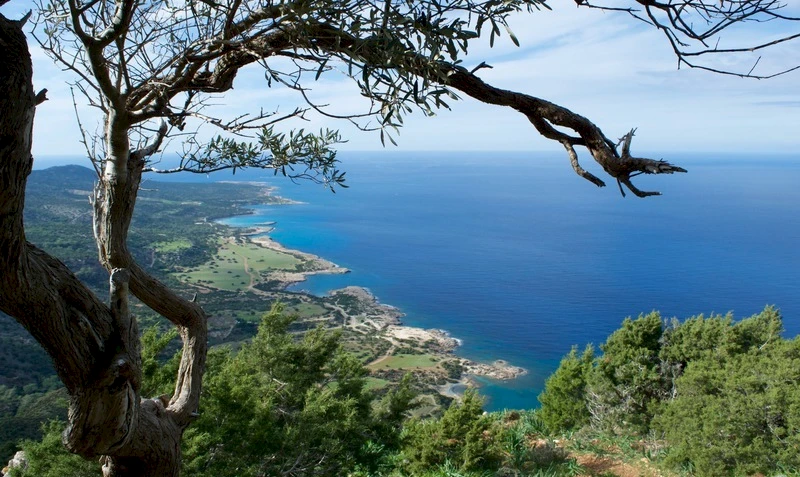
The Akamas Peninsula in Cyprus
The Akamas Peninsula covers the northwestern part of the Republic of Cyprus. It is one of the island’s most valuable natural areas: rocky shores, sandy bays, gorges, juniper and pine areas, coastal vegetation, and marine ecosystems come together here.
Akamas is part of the Natura 2000 network. The area is important for the conservation of rare plants, birds, reptiles, insects, and sea turtles. At the same time, Akamas remains a popular destination for walks, photo routes, off-road trips, cycling, boat trips, and swimming.
Before traveling, it is important to consider the condition of the roads. Forest and coastal roads on the peninsula are in some places unpaved, rocky, and steep. The Forest Department of the Republic of Cyprus periodically closes certain roads or restricts traffic due to safety, works, or road conditions. Before heading deeper into the peninsula, it is worth checking current restrictions and not relying only on the navigation app.
History of Akamas
The name of the peninsula is linked to the ancient Greek hero Akamas, the son of Theseus. The area is also associated with ancient routes, old settlements, and coastal necropolises. Well-known places near Akamas include the Baths of Aphrodite, Latchi, Polis, and the villages of the northwest of the Paphos region.
Flora on the Akamas Peninsula
The peninsula features pine and juniper areas, shrubs, pastures, coastal plants, and seasonal flowers. Hundreds of plant species have been recorded in Akamas, including rare and endemic species of the Republic of Cyprus.
Among the characteristic plants of the region, the Cyprus cyclamen, sea daffodil, orchids, juniper, pistachio, and other Mediterranean species are often mentioned. In spring, the peninsula is especially interesting for hiking and observing the blooming.
Fauna on the Akamas Peninsula
Akamas is important not only as a land ecosystem but also as a marine one. Birds, reptiles, insects, small mammals, and marine animals are found here.
Reptiles
Lizards, chameleons, and snakes live in the Akamas area. Among venomous snakes, the blunt-nosed viper is the most dangerous to humans. On trails and dirt roads, do not approach snakes, try to touch them, or photograph them from close range.
Insects
The peninsula is known for its diversity of butterflies and other insects. In the warm season, you can see endemic and rare species here, especially in areas with moist spots and gorges.
Marine fauna
A special value of Akamas is the Lara and Toxeftra beaches, where green and loggerhead sea turtles nest. During the nesting season, you must not place umbrellas and sun loungers in protected areas, drive onto the beach with vehicles, touch nests, or disturb the turtles.
| What to know | Practical information |
|---|---|
| Location | Northwest of the Republic of Cyprus, Paphos region |
| Status | Natura 2000 natural area |
| Entrance | Free |
| Best time | March–May and September–November |
| Roads | In places unpaved and difficult; an off-road vehicle is needed for some routes |
| Infrastructure | Limited within the natural area; cafes and accommodation are available in Latchi, Polis, and Neo Chorio |
Trekking on the Akamas Peninsula
Akamas is suitable for hiking, but in summer the routes can be difficult because of the heat and the lack of shade on some sections. For walks, you need closed shoes, water, a hat, and a charged phone.
Popular routes include:
- the Aphrodite Trail — a route from the Baths of Aphrodite area to viewpoints above the coast;
- the Adonis Trail — another well-known route in the Baths of Aphrodite area;
- Avakas Gorge — a scenic canyon with narrow passages and steep cliffs;
- routes to Cape Arnaoutis and coastal bays;
- walks in the Lara and Toxeftra area, taking into account turtle protection rules.
How to get to Akamas
The main starting points for a trip to Akamas are Polis, Latchi, and Neo Chorio. From Paphos, these places are usually reached by car or by bus with a transfer. For the Blue Lagoon, a boat from Latchi is often chosen, because the coastal roads inside the peninsula are not suitable for all cars.
By bus
Bus No. 622 runs from Polis to the Baths of Aphrodite. From Paphos, you first need to get to Polis, then transfer to the route to the Baths of Aphrodite. It is better to check the timetable before traveling, especially outside the high season.
By car
You can drive to Latchi, Polis, Neo Chorio, and the Baths of Aphrodite in a regular car on paved roads. For the unpaved sections inside Akamas, including certain roads to Lara, Fontana Amorosa, and remote bays, it is better to choose a four-wheel-drive vehicle and check road conditions in advance.
If you are planning a self-drive trip around the northwest of the Republic of Cyprus, you can compare car rental options through Localrent. For Akamas, it is better to check the rental conditions in advance: not all companies allow driving on dirt roads.
By boat or on an excursion
The Blue Lagoon and part of the Akamas coastline are best seen from the sea. Boats usually depart from Latchi. This is a good option if you do not want to drive on dirt roads or plan to swim in the bays.
Day trips to Akamas, the Blue Lagoon, the Baths of Aphrodite, and the villages of the Paphos region can be found on Tripster or Sputnik8.
Frequently asked questions about the Akamas Peninsula
Can you swim in the Akamas area?
Yes, you can swim in the bays and on the beaches along the coast. But there is almost no infrastructure on the wild beaches, so you need to bring water, food, and trash bags with you. All trash must be taken to the nearest container.
Do you need to pay to enter the park?
No. Entry to the natural area is free. Paid services include excursions, boat rentals, buggies, quad bikes, cars, and other services provided by private operators.
Can you stay overnight in the park?
Camping and overnight stays in the natural area are prohibited or restricted by the area’s protection rules. For an overnight stay, it is better to choose accommodation in Latchi, Polis, Neo Chorio, or nearby villages.
When is the best time to visit Akamas?
The best time is spring, especially March–May, and autumn, roughly September–November. In summer, the trails are hot and there is little shade, so hiking routes are best started early in the morning.
Are there restaurants and cafes in the park?
Infrastructure within the natural area is limited. Cafes, tavernas, and shops are located in Latchi, Polis, Neo Chorio, and other nearby villages.
Can you go to Akamas in a regular car?
You can drive to the main settlements, Latchi, Polis, Neo Chorio, and the Baths of Aphrodite in a regular car. For the dirt roads inside the peninsula, it is better to use an off-road vehicle and check in advance whether the rental company allows driving on such roads.
Are there restrictions on Lara and Toxeftra beaches?
Yes. This is an important nesting area for sea turtles. You must not disturb nests, place equipment in protected areas, drive onto the beach with vehicles, or leave trash.
Author

I am a person who is not afraid to change life when my heart tells me that something greater lies ahead. I am originally from Belarus. I have journeyed from pedagogical and economic education to the financial sector and many years of work in logistics — a world where everything moves, changes,…
You may also be interested in:
- Dragon’s Cave in Pomos: the dragon’s cave in northwestern Cyprus
- Episkopi in the Paphos region: a sheer cliff, the Ezousa Valley, and hidden places
- Troodos Ophiolite: Cyprus’s Main Geological Landmark
- Cyprus Perfumery Theme Park: the history of ancient perfumery in the Republic of Cyprus
- Polis and Latchi: the sea, villages, Akamas, and wineries of the northwest of the Republic of Cyprus