All Blue Flag Beaches in the Republic of Cyprus for 2025
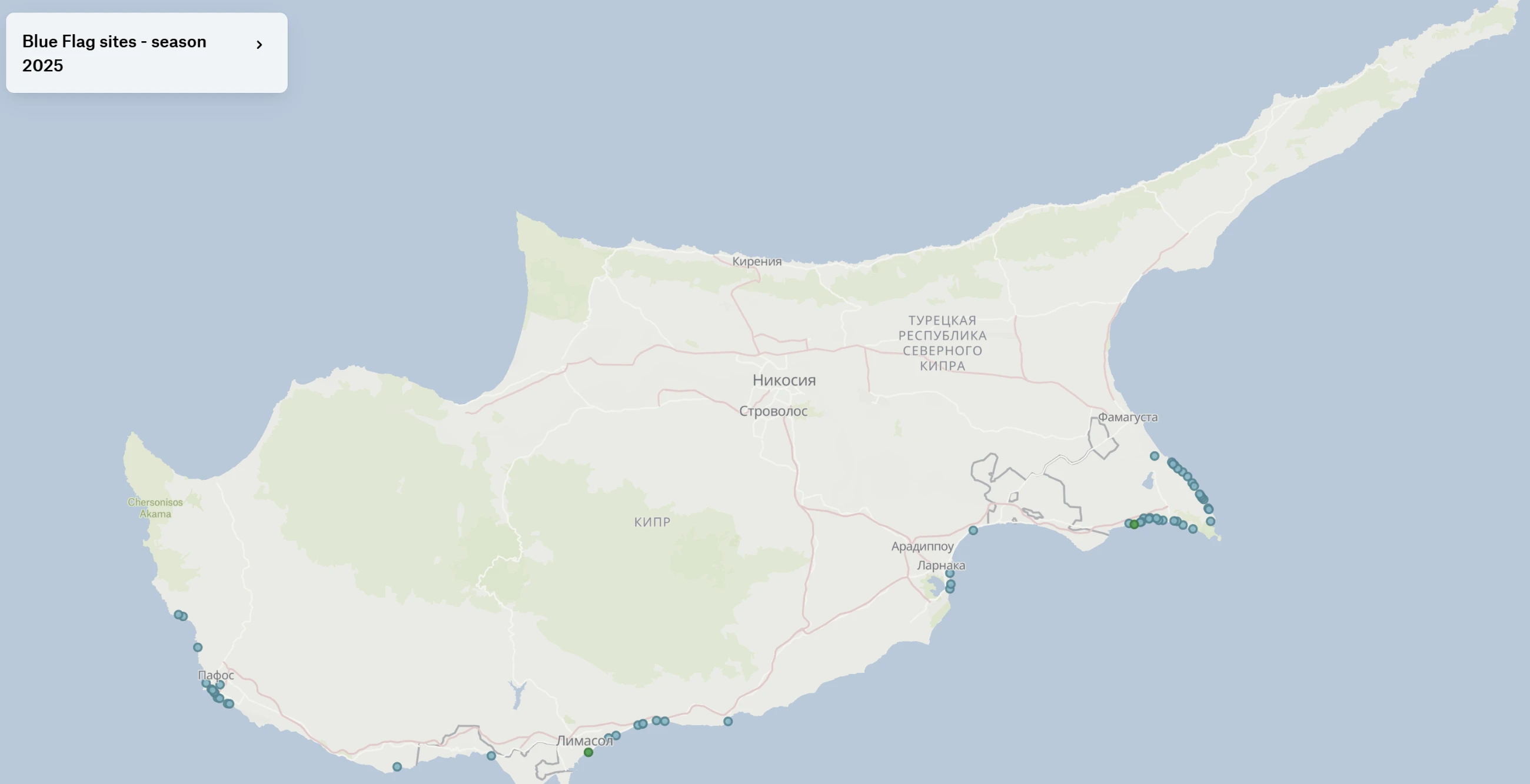
In the 2025 summer season, 66 locations in the Republic of Cyprus were awarded the Blue Flag: 64 beaches and 2 marinas. This is convenient for your trip, as you can immediately open the desired spot in Google Maps via the link in the beach name to understand if that specific shore suits your area, logistics, and holiday format. If you are flying for a vacation, it is wise to arrange medical insurance in advance, for example, through Tripinsurance, and for beach navigation and staying connected after arrival, it is handy to set up a travel eSIM beforehand, for example, via Drimsim.
Below is the current list of Blue Flag beaches in the Republic of Cyprus for 2025 by district. The links in the names open the location in Google Maps.
- What Blue Flag means
- Paphos District Beaches
- Limassol District Beaches
- Larnaca District Beaches
- Famagusta District Beaches
- Blue Flag Marinas
- How to use the list
- Frequently Asked Questions
What Blue Flag means
The Blue Flag is an international award for beaches and marinas that is presented annually. The assessment takes into account water quality, safety, environmental management, information materials for visitors, and basic infrastructure.
For practical beach selection in the Republic of Cyprus, this status is useful but does not replace checking a specific location. Even two neighboring Blue Flag beaches can differ significantly in water depth, crowds, parking, wind, and the presence of cafes.
Paphos District Beaches
Geroskipou Municipality
Paphos Municipality
Akamas Municipality
Limassol District Beaches
Pentakomo and Parekklisia
Amathounta Municipality
Episkopi and Pissouri
Larnaca District Beaches
Famagusta District Beaches
Paralimni — Deryneia Municipality
- Armiropigado
- Kappari
- Skoutarospilioi
- Agia Triada
- Vrysoudia
- Louma
- Pernera
- Potami
- Vrysi C
- Vrysi B
- Vrysi A
- Protaras (Fig Tree)
- Vizakia
- Nissia
- Protaras Bay
Ayia Napa Municipality
- Konnos Bay
- Limnara
- Ammos tou Kambouri
- Glyki Nero
- Pantachou
- Katsarka
- Pernera
- Vathia Gonia
- Nissi Beach
- Nissi Bay
- Landa
- Macronissos
- Ziatzi
- Agia Thekla
- Ayia Napa Marina
- Gliki Nero
Blue Flag Marinas
How to use the list
For a short trip, it is more convenient to first choose a district and only then open specific points on Google Maps. If you are staying in Larnaca, it is usually easiest to start with Phinikoudes, Kastella, and Mackenzie. For a trip to the Ayia Napa and Protaras area, visitors often immediately save Nissi Beach, Konnos Bay, and Protaras (Fig Tree).
If you plan to visit several beaches in different districts of the Republic of Cyprus, consider connectivity and navigation in advance. For mobile internet and maps on the road, it is convenient to use Drimsim, and if the trip is built around several beach locations and you need route freedom, it makes sense to compare car rentals via Localrent beforehand.
Before traveling, it is still useful to check parking, availability of sun loungers, seasonal occupancy, water entrance, and wind conditions. The Blue Flag is a good guide for quality and basic infrastructure, but not a guarantee that this specific beach will be the best for children, a secluded getaway, or snorkeling.
Frequently Asked Questions
How many Blue Flag beaches are in the Republic of Cyprus in 2025
In the 2025 season, 64 beaches in the Republic of Cyprus received the Blue Flag. Another 2 awards were given to marinas, bringing the total to 66 locations.
Are there Larnaca beaches on the list
Yes. The current 2025 list includes Phinikoudes, Kastella, Mackenzie, Yanathes, and Zygi.
Are Nissi Beach and Konnos Bay on the list
Yes. The 2025 list includes Nissi Beach, Nissi Bay, and Konnos Bay.
Does Blue Flag mean the beach is the best on the island
No. This status confirms compliance with water quality, safety, and infrastructure criteria, but does not determine which beach will be best for your specific vacation scenario.
Do I need to check the list every year
Yes. The award is given annually, so the list is updated seasonally. For a trip, it is better to look at the current list for the specific year.
Why are there links to Google Maps in the article
They allow you to immediately open the beach location, check access, parking, nearby cafes, reviews, and understand if the place suits you before you travel.
Author

I am a person who is not afraid to change life when my heart tells me that something greater lies ahead. I am originally from Belarus. I have journeyed from pedagogical and economic education to the financial sector and many years of work in logistics — a world where everything moves, changes,…
You may also be interested in:
- Dragon’s Cave in Pomos: the dragon’s cave in northwestern Cyprus
- Episkopi in the Paphos region: a sheer cliff, the Ezousa Valley, and hidden places
- Troodos Ophiolite: Cyprus’s Main Geological Landmark
- Cyprus Perfumery Theme Park: the history of ancient perfumery in the Republic of Cyprus
- Polis and Latchi: the sea, villages, Akamas, and wineries of the northwest of the Republic of Cyprus