Where to see flamingos in Cyprus — best lakes and the 2026 season
Pink flamingos (most often the greater flamingo, Phoenicopterus roseus) arrive in Cyprus for the winter at salt lakes and lagoons. The main locations for sightings are the Larnaca and Akrotiri (Limassol) salt lakes, as well as Paralimni and Oroklini lakes. The typical season is November–March, with the most reliable months for sightings being December–February. These are protected birds: do not feed them, disturb them with drones, or approach too closely — it is safer to observe from shore points, trails, and platforms.
- Larnaca Salt Lake
- Paralimni Lake
- Oroklini Lake
- Limassol Salt Lake (Akrotiri)
- Where to see in Northern Cyprus
- Observer Tips
- Table: where and when to watch
- Glossary
- Frequently Asked Questions
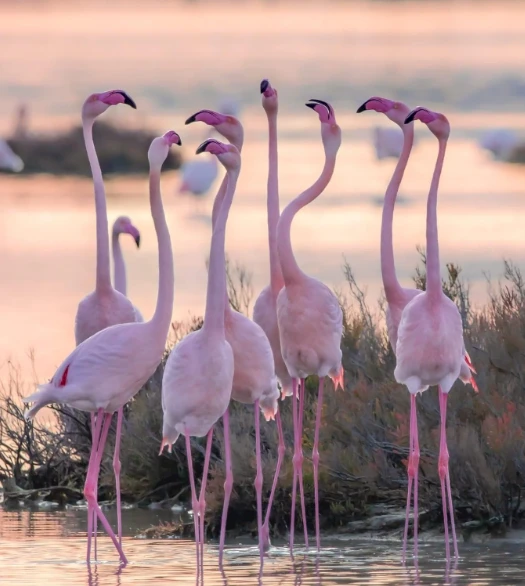
Larnaca Salt Lake
The most popular spot due to its proximity to Larnaca airport and convenient access to observation points. The best time is early morning and pre-sunset hours: fewer people and softer light for observation and photography.
Visiting practice: Larnaca Salt Lake has convenient walking paths and observation points. Tourist and regional guides highlight the trail around the lake and the area near the Hala Sultan Tekke mosque as spots from which you can watch birds without entering the salt flats.
Good to know: Larnaca Salt Lake is a complex of several lakes and is part of important wetland areas (Ramsar and Natura 2000 statuses are often mentioned in official/regional tourist resources).
Paralimni Lake
Located near the resorts of Protaras and Ayia Napa. The lake is shallow, so flamingos are often visible closer to the shore (if distance is maintained). On calm days, “mirror-like” reflections of the flock may appear on the water.
Oroklini Lake
A small but often “birdy” body of water near Larnaca. Usually quieter than larger lakes, making it convenient for peaceful observation. Surrounding paths and parking spots are easier to access than the busiest locations.
Limassol Salt Lake (Akrotiri)
The largest salt lake in the southern part of the island, between the village of Akrotiri and Limassol. In winter, it is one of the main locations for observing flamingos in the Republic of Cyprus. Observation points are usually chosen along shore accesses and solid platforms to avoid driving onto soft salt flats.
Nearby operates the Akrotiri Environmental Education Centre — here you can learn about migratory birds and observe from a distance. According to Cyprus-FAQ, admission to the center is free, and the contact phone number is: +357 25 826562.
If you plan a trip specifically to Akrotiri, you can also check a separate Cyprus-FAQ article: Read more about Akrotiri Lake.
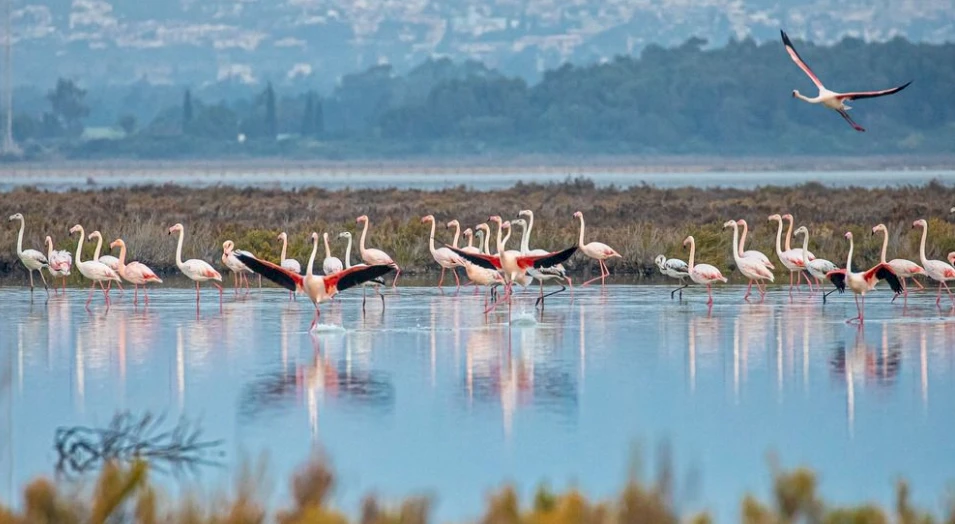
Northern Cyprus: Additional Spots
If you have the opportunity to visit Northern Cyprus, the chances of seeing flamingos in winter can also be high. Frequently mentioned spots include:
- Gülseren Lake (Famagusta) — a salt lake within the city, convenient for short trips.
- Kukla Wetlands — wetland areas with birdwatching points.
Observer Tips
- Season: November–March; peak numbers usually occur in December–February.
- Time of day: early morning and sunset — soft light and fewer people at the points.
- What to bring: binoculars or a camera with a telephoto lens, a windbreaker, water, closed shoes (shores can be sticky and muddy after rain).
- Observation ethics: maintain distance, do not use drones, do not feed birds, do not enter the water or reed areas.
- Parking and terrain: salt flats soften after rain — park on solid ground and do not drive to the water’s edge.
How to do it
- Choose a date within the season (November–March) and aim for morning or sunset.
- Open the location on the map (links above) and mark a solid parking spot in advance.
- Bring binoculars/camera and shoes you don’t mind getting dirty; shores can be sticky after rain.
- Observe from a distance: do not enter the salt flats and do not approach the flock.
Table: where and when to watch
| Location | On-site convenience |
|---|---|
| Larnaca Salt Lake | Many shore points, easy to combine with a walk; closer to the city and airport. |
| Paralimni Lake | Nearby resorts of Protaras and Ayia Napa; birds often visible from the shore in shallow areas. |
| Oroklini Lake | Usually quieter; suitable for observation without crowds. |
| Akrotiri Salt Lake (Limassol) | Large water area; includes Akrotiri Environmental Education Centre and shore accesses. |
| Northern Cyprus (Gülseren, Kukla Wetlands) | Additional spots to expand your route. |
Glossary
- Birdwatching — observing birds in the wild without interfering with their behavior.
- Ramsar — international status for wetlands important for biodiversity conservation.
- Natura 2000 — a network of protected areas in the EU for species and habitat conservation.
- Salt flat — an area with salty soil that can become very soft and sticky after rain.
- Telephoto lens — a lens with a long focal length that helps photograph birds from a safe distance.
Frequently Asked Questions
Which months are easiest to see flamingos in the Republic of Cyprus?
Most often from December to February. In general, the observation season is usually November–March.
Where are the most reliable observation points?
Larnaca and Akrotiri (Limassol) salt lakes, as well as Paralimni and Oroklini lakes.
Can flamingos be fed?
No. Feeding wild birds disrupts their behavior and can harm their health and the ecosystem.
Can drones be used near the lakes?
Not recommended: drones disturb birds and may cause the flock to leave the feeding area.
Can I get closer “for photos” by entering the salt flats?
No. Observe from the shore and official points: entering the flats or water can damage the environment and disturb birds.
Is it worth visiting in summer?
The chance of seeing flamingos is much lower in summer: key wintering sites depend on water availability after rain.
Where is more convenient with a child?
It is usually easier to choose locations with paths and convenient shore points: Larnaca and Oroklini are often more comfortable for a peaceful walk.
Is a pair of binoculars necessary?
Recommended. Binoculars allow observing from a safe distance without approaching the birds.
Author

I am a person who is not afraid to change life when my heart tells me that something greater lies ahead. I am originally from Belarus. I have journeyed from pedagogical and economic education to the financial sector and many years of work in logistics — a world where everything moves, changes,…
You may also be interested in:
- SafeCY in the Republic of Cyprus: How to Find the Nearest Shelter on the Map
- Botanical Paradise: The Island’s Earliest Wildflowers — Anemones
- Pitsilia in Cyprus: Culinary Traditions and Famous Meat Delicacies
- Public workshops for children and adults O Topos en oi Anthropoi (“The Place Is People”) — Republic of Cyprus 2026
- Valentine’s Day Gift Ideas in the Republic of Cyprus