
Europe Close by: French President's Visit to Cyprus as a Signal of Collective Security
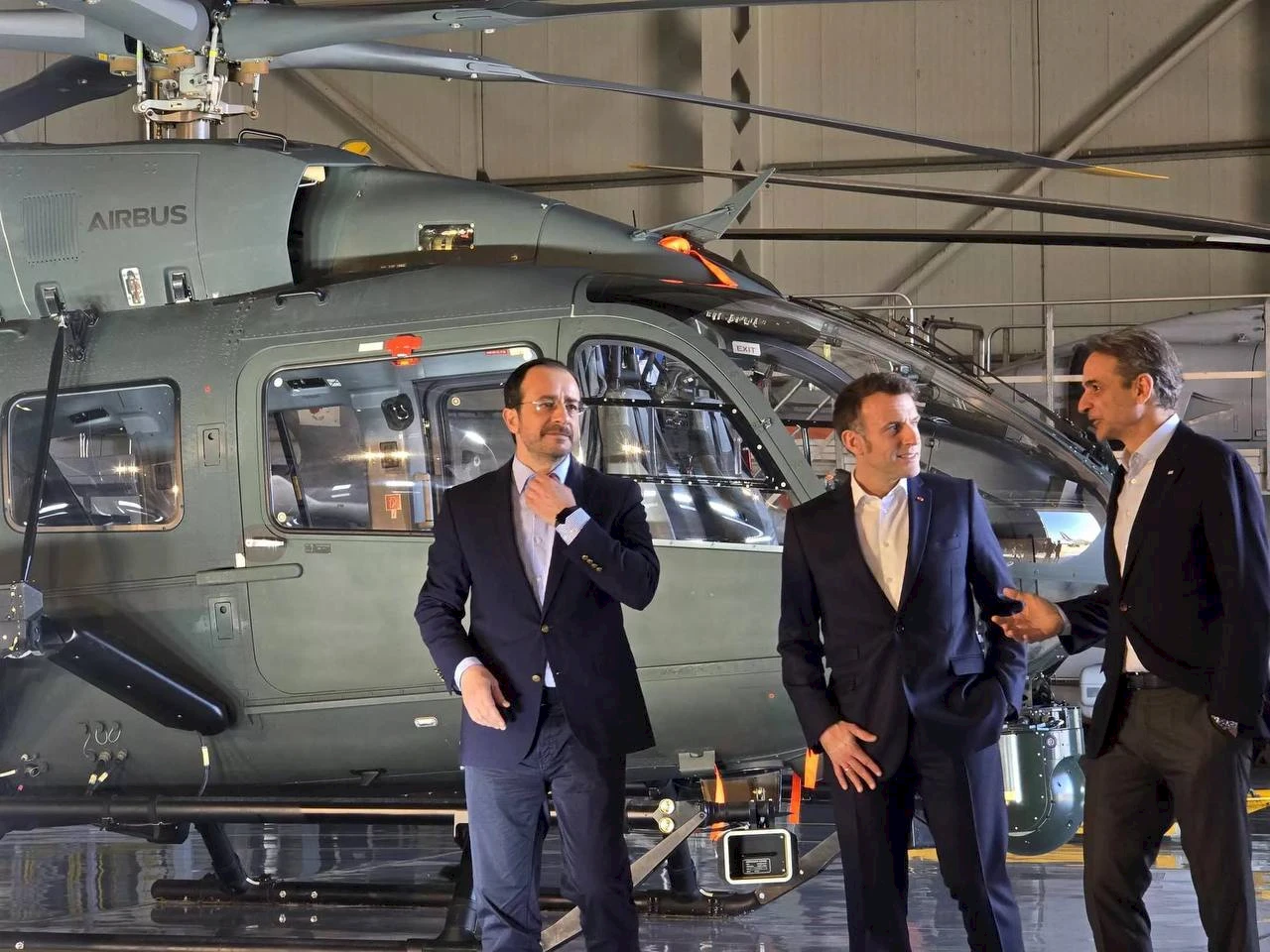
The visit of French President Emmanuel Macron to Cyprus, held jointly with Greek Prime Minister Kyriakos Mitsotakis, served as an important political signal for the entire European Union. The meeting with the President of the Republic of Cyprus, Nikos Christodoulides, at the Andreas Papandreou Airbase in Paphos demonstrated the readiness of European states to respond promptly to security threats in the Eastern Mediterranean.
Amidst the drone and missile attacks the island has faced, the French leader's visit and the presence of French military forces in the region were a clear manifestation of European solidarity. For Cyprus, this moment holds special significance: the island received a clear signal that it will not be left alone to face threats and aggression.
Speaking at the base in Paphos, Cypriot President Nikos Christodoulides emphasized the symbolic and political importance of the visit. According to him, the presence of the French leader is of "substantial importance for Cyprus and all of Europe." He thanked France for its rapid response and practical support, stressing that Cyprus's security is directly linked to the security of Europe.
The Cypriot president also noted the symbolism of the event. The frigate "Kimon," involved in the operation, bears the name of one of the greatest admirals in Greek history, closely associated with Cyprus.
According to Christodoulides, the participation of France, Greece, Italy, and Spain demonstrates that European solidarity is not just a political declaration but a matter of real action.
At the same time, Cyprus emphasizes the humanitarian nature of its role in ongoing events. The Republic does not participate in military operations, limiting itself to humanitarian activities. However, the historical experience of the country, part of whose territory remains occupied, lends particular sensitivity to issues of security and stability.
France, in turn, made it clear that it views the events in Cyprus as a matter of pan-European security. According to Emmanuel Macron, an attack on Cyprus effectively means a threat to all of Europe.
Paris responded swiftly to the attacks. The frigate "Languedoc" was sent to the region, along with a "Mistral" air defense unit. A key element in strengthening the defensive posture was the presence of the French aircraft carrier Charles de Gaulle (R91) and its strike group in close proximity to the island.
Macron emphasized that these actions are defensive in nature and aimed at ensuring the safety of European citizens and maintaining stability in the region. France intends to maintain an active military presence in strategically important areas — in the Mediterranean Sea, the Strait of Hormuz, and the Red Sea.
The French president placed special emphasis on international cooperation. He noted the contribution of Greece and other European countries, and highlighted the role of Operation "Shield," led by Athens. Under this operation, two warships will be sent to the Red Sea to ensure the safety of maritime routes.
The joint appearance of the French president and the Greek prime minister in Cyprus was not only a diplomatic gesture but a demonstration of Europe's political unity. For Cypriot society, it served as a vital confirmation that European partners are ready to support the country in times of crisis.
The events surrounding Cyprus also raise the broader question of the future of the European security system. While European states currently react to threats mainly through situational solutions and coalitions, the current situation shows that such mechanisms may gradually evolve into a more stable and institutional system.
The experience of collective reaction to threats in the Eastern Mediterranean strengthens the arguments of those who advocate for deepening defense cooperation within the European Union. In the long term, this could involve the gradual transformation of such ad hoc solutions into full-fledged pan-European defense instruments — potentially leading to the formation of a European army.
Emmanuel Macron's visit to Cyprus showed that Europe is already capable of acting as a unified strategic security space. The next step could be the institutionalization of this solidarity — turning political signals and temporary solutions into a stable architecture for European defense.
Author
Born in the city of shipbuilders, Mykolaiv (Ukraine). Currently living in Moscow. Diplomat in reserve. More than 10 years of experience in the Mediterranean region (Greece, Cyprus). Until 2015, First Secretary of the Russian Embassy in Cyprus. Fluent in Greek and English. Completed civil service in…
You may also be interested in:
- Cyprus climbs to 34th place in global startup ecosystem ranking
- Schengen for Cyprus is delayed for now: European Commission continues to evaluate Nicosia's readiness
- Greece to maintain permanent F-16 fighter jet presence in Cyprus
- Cyprus tightens e-scooter rules: minimum age set at 17
- AI risk management in business to be discussed in Nicosia
