
Cyprus creates its own firefighting aviation fleet
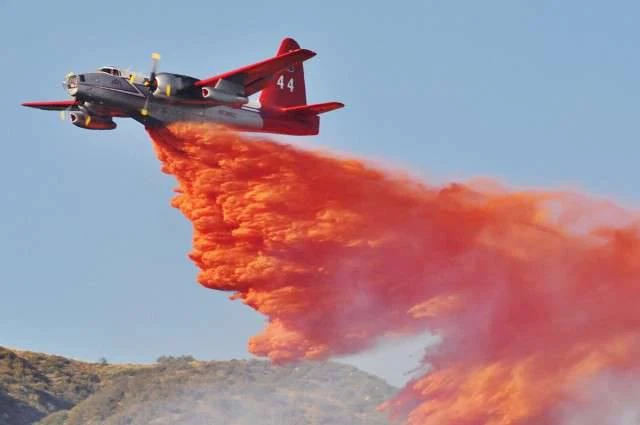
The Cypriot authorities are launching a process intended to make the firefighting system more self-sufficient. A tender has been announced for the purchase of the country’s own firefighting aircraft — three planes are planned for the first phase. This was stated in an interview with the Cyprus News Agency by Andreas Grigoriou, Director General of the Ministry of Agriculture, Rural Development and Environment.
According to the government’s plan, Cyprus aims to form its own fleet of around ten aerial firefighting assets within five years. Further acquisitions are not ruled out if needed.
During the current fire season, 13 main aircraft are in operation: nine airplanes and four helicopters. When necessary, helicopters of the National Guard and the police are also deployed. At the same time, the authorities acknowledge that if several large fires break out simultaneously, leased resources may be insufficient, and finding aircraft “at short notice” in summer can be difficult.
At the same time, forest monitoring is being modernized to detect fires more quickly and immediately transmit coordinates to emergency services. A basic data transmission network has already been deployed, four early-detection sensors installed, and five drones purchased. At the next stage, monitoring will be expanded, risk assessment and fire spread forecasting tools added, mobile command units and the main control center upgraded. The Fire Service and the National Guard will be involved in the work. This season, the TETRA communication system is additionally being used for faster coordination.
In addition to aviation, the island is expanding its ground equipment fleet: new off-road fire engines, water tankers, engineering machinery and staff transport are being procured. In 2026, the Forestry Department is expected to receive another 17 large fire engines with increased water capacity.
The ministry emphasizes that the situation is increasingly affected by climate change — hotter, drier conditions and more complex fires — as well as abandoned rural areas and changes in land use. Therefore, the transition to an independent, sustainable firefighting system is seen as a necessary step for the years ahead.
Author

I am originally from St. Petersburg — a city with a unique character and rhythm. My professional life began rapidly: at just 16, I plunged into the world of global events. The World Cup, the roar of Formula 1 cars in Sochi, the energy of VK Fest, and the backstage of Fashion Week — I always…
