
Ancient Traces of Human Activity Unearthed in Limassol
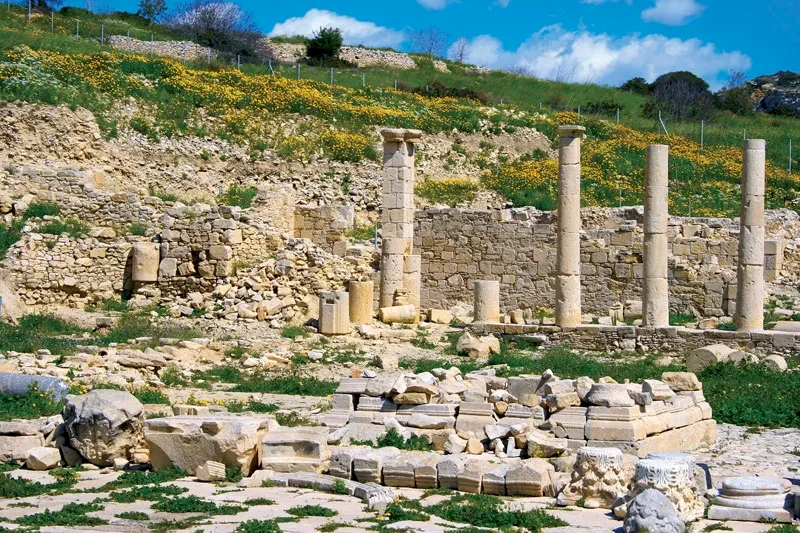
Archaeologists have discovered evidence of human activity dating back to the 1st millennium BC on the western terrace of the Amathus Acropolis in Limassol.
According to the Department of Antiquities, the remains of buildings and fragments of pottery were found beneath layers of collapse at two separate points on the site.
Excavations began in April following a geophysical survey, which suggested the possible presence of ancient structures. In one trench, researchers uncovered a dense layer of tiles, likely dating to the Late Roman period. In another, they found collapsed stones believed to be part of a dry-stone wall. Pottery recovered from both trenches was mixed and came from different historical periods.
Amathus was one of the most important city-kingdoms of ancient Cyprus. The newly uncovered artifacts—including roofing tiles, commercial amphorae, and a wall section running north to south—point to the possibility that this area was settled much earlier than previously believed. The western terrace of the acropolis may have been in use as far back as the 1st millennium BC.
The excavation is part of a broader project led by Dr. Anna Cannavo, supported by the French School at Athens, the French Ministry of Foreign Affairs, and the HiSoMA research center in Lyon.
Author

Born in 1984 in Russia, in the city of Yekaterinburg (Sverdlovsk region). Since 2023, he has been living in Northern Cyprus. Education: Ural State University (UrGU, now UrFU), Faculty of Journalism. Specialization – journalist (2007). Professional experience: From 2003 to 2023, he worked in…
You may also be interested in:
- Demolition of the legendary Pieris Estate long-term unfinished building begins in Limassol
- Abduction of two-year-old child investigated in Limassol: Father took toddler to the north of the island
- Cyprus keeps fuel prices below EU average amid energy instability
- Night explosion in Geroskipou: Police investigate incident with improvised device
- Cruise ship quarantine in France: Over 1,700 remain on board after passenger's death
