Primary school in the Republic of Cyprus
Primary school in the Republic of Cyprus is a compulsory 6-year stage of education from Grade 1 to Grade 6. Children are enrolled in public schools from the age of 6, tuition is free, and regular classes should not have more than 25 students. Upon completion of Grade 6, the child receives a primary school leaving certificate and moves on to the next stage of education. In the public system, there are no separate final exams at the end of primary school, and the decision for a student to repeat a year is made only in exceptional cases.
- How primary school is structured
- Public schools
- Private schools
- Tuition fees
- Assessment, uniform, and promotion to the next grade
- How to enroll a child
- Useful materials on the topic
- Frequently Asked Questions
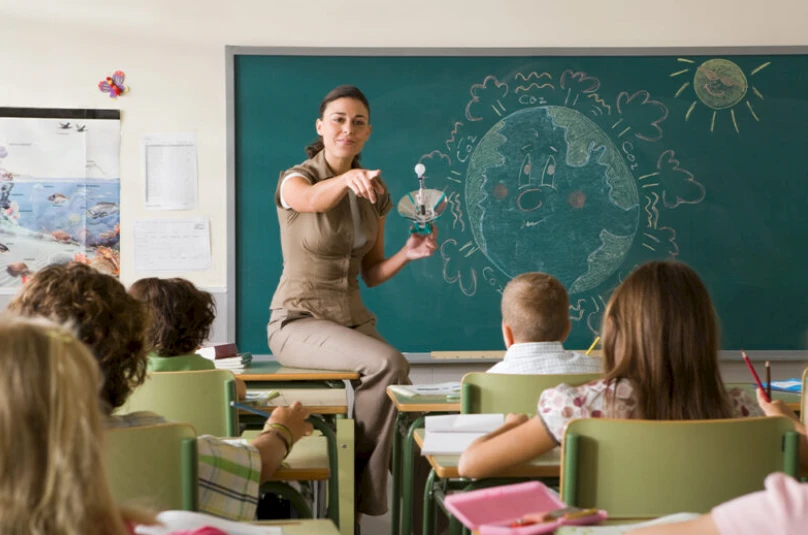
How primary school is structured
Primary school in the Republic of Cyprus covers Grades 1–6 and lasts for 6 years. For public schools, this is a compulsory and free stage of education for all children living in the country. Children are admitted to Grade 1 from the age of 6. After completing Grade 6, the child receives a primary school leaving certificate.
The Ministry of Education, Sport and Youth is responsible for managing both public and private primary schools. The principle of equal access to education regardless of gender, marital status, social status, and individual characteristics is declared for children.
What parents need to know
- Instruction in public schools is conducted mainly in Greek;
- Primary school is a compulsory stage;
- Regular classes have a maximum of 25 students;
- In mixed-grade classes, where several ages are combined, the limit is usually lower;
- Upon completion of Grade 6, the child moves on to the next stage of education.
Public schools
Public primary schools in the Republic of Cyprus are free. They are funded by the state and operate under a unified system established by the Ministry of Education.
In official descriptions of the system, public schools are distinguished by the number of teachers and the scale of the school. In practice, small rural schools may operate with a small number of teachers, while large urban schools have an expanded staff and several parallel classes for each grade.
| Type | Comment | What this means for the family |
|---|---|---|
| Small rural school | Can operate with one or two teachers or a small teaching staff. | More common in villages and sparsely populated areas. |
| Middle-sized school | Usually has several teachers and separate classes by age. | This format is common in small towns and large communities. |
| Large urban school | Has 6 or more teachers, several classes per parallel, and more developed infrastructure. | More common in Nicosia, Larnaca, Limassol, and Paphos. |
Since the 2010/2011 academic year, the maximum capacity of a regular primary school class is 25 students. This rule applies to public primary schools and remains the basic guideline for organizing classes.
Private schools
Private primary schools in the Republic of Cyprus operate under a license from the Ministry of Education and are subject to the rules of private education. These schools are governed by the Private Schools Law 2019. Tuition is paid in the private sector, and the language of instruction can be English, Greek, Russian, or another language, depending on the specific school's program.
Many private schools offer a full educational cycle: from the preschool stage to the completion of secondary school. This is convenient for families who want to maintain a single educational environment for several years.
Types of private schools
- Schools with programs close to the state system;
- British schools teaching the British curriculum;
- American schools;
- Russian-language and bilingual schools;
- International schools with several languages of instruction.
Russian-language schools and departments are primarily located in Limassol, Nicosia, and Paphos. For families who value the Russian language, intensive English, and the child's adaptation without a sharp transition to Greek, this is one of the popular options. However, curricula, language of instruction, costs, and the format of certificates must be checked individually at each school.
Tuition fees
In the public sector, education is free. In private schools, the cost depends on the city, the language of instruction, the school's brand, and additional services.
| Type | Cost | Comment |
|---|---|---|
| Public school | 0 EUR | Tuition is free. |
| Private school, lower range | approximately 1,000 EUR to 3,000 EUR per year | More often refers to local or specialized schools. |
| Private school, mid-range | approximately 3,500 EUR to 6,000 EUR per year | Often found in licensed British and international schools. |
| Private school, high range | from 6,000 EUR per year and above | Applicable to some international schools with an expanded service package. |
In addition to the main tuition fee, private schools may have separate charges for registration, uniform, school bus, meals, extracurricular activities, digital devices, and deposits. Options for installments, family discounts, and discounts for one-time payments are common, but conditions depend on the school.
Assessment, uniform, and promotion to the next grade
In primary school in the Republic of Cyprus, the focus is on ongoing assessment of progress, class participation, work at home and in school, and project assignments. Teachers may use written and oral tests throughout the year, but there is no separate final exam at the end of primary school.
Homework in primary school is usually built around practice, reading, small written assignments, and creative projects. The format depends heavily on the specific school and teacher.
Promotion to the next grade
Usually, a child moves from grade to grade based on age. Repeating a year is possible only in exceptional cases, with insufficient progress, and no more than once during the entire period of primary school. This requires the approval of the school inspector and notification of the parents or guardians.
School uniform
There is no detailed uniform standard uniform for all schools: requirements are usually set by the school itself. In practice, they often ask for simple black shoes for daily attendance, and sportswear and sneakers only for physical education classes. Before buying a uniform, it is better to clarify the list of requirements with your specific school.
How to enroll a child
Registration for public primary schools takes place in January, and dates for the specific academic year are published by the Ministry of Education. Electronic registration has been used for Grade 1 in recent years, while for other grades, an online or in-person format is possible depending on the procedure for the corresponding year.
All children residing in the Republic of Cyprus, regardless of citizenship and regardless of whether the parents are in the country on legal grounds, have the right to enroll in a public primary school.
How to do it
- Check the school zone based on your residential address.
- Check the registration dates for the required academic year on the Ministry of Education website.
- Prepare the child's documents and proof of address.
- Submit an application online or at the school, if such a format is provided.
- After confirmation of enrollment, clarify the uniform list, educational materials, and schedule.
Documents usually required
- Child's birth certificate;
- Child's passport or ID;
- Proof of residential address;
- Parents' or guardians' documents;
- If necessary — medical data or vaccination card, if required by the school.
Useful materials on the topic
- How to enroll a child in school in Cyprus
- What vaccinations are required for school enrollment
- Phone numbers and other contacts of Cyprus schools
- Pre-school education in the Republic of Cyprus
Frequently Asked Questions
At what age does a child start primary school in the Republic of Cyprus?
Children are enrolled in public primary school from the age of 6.
How many years does primary school last?
6 years: from Grade 1 to Grade 6.
Is tuition in public school paid?
No, tuition in public primary schools is free.
Are there final exams at the end of primary school?
No, there is no separate final exam upon completion of primary school in the public system.
How many children can be in one class?
In a regular class, the maximum capacity is 25 students.
Can a child be held back for a second year?
Yes, but only in exceptional cases and no more than once during the entire period of primary education.
Can I enroll a child in a public school if the parents do not have a residence permit?
Yes. For public schools, it is important that the child lives in the Republic of Cyprus; the right to enrollment does not depend on the legal status of the parents.
How much do private schools cost?
The range is wide: from relatively affordable local schools to expensive international campuses. Besides the tuition fee, there are often additional charges.
Author
I am a person who is not afraid to change life when my heart tells me that something greater lies ahead. I am originally from Belarus. I have journeyed from pedagogical and economic education to the financial sector and many years of work in logistics — a world where everything moves, changes,…
You may also be interested in:
- Summer schools in the Republic of Cyprus in 2026: dates, schedule, and how to enroll a child
- Required vaccinations for primary school enrollment in the Republic of Cyprus
- How to pay for education and courses in the Republic of Cyprus online
- Phone numbers and school contacts in the Republic of Cyprus
- How to enroll a child in school in the Republic of Cyprus in 2026