
Carob Tree in Cyprus: History, Harvesting, Uses, and Benefits
Carob is one of the most recognizable products of Cyprus. It is harvested strictly in season, and the police monitor compliance with the rules because the crop is valuable and belongs to farmers.
- What a carob tree is
- Uses of carob
- What is made from carob
- Benefits of carob
- When carob is harvested
- Frequently Asked Questions
The carob tree, or carob, is one of the most recognizable plants of the Mediterranean and a true symbol of Cyprus. Its pods are collected strictly during a specific season, and the police closely monitor compliance: unauthorized harvesting is prohibited and penalized. This is due to the high value of the crop and the fact that many trees belong to local farmers.
What a carob tree is
The carob tree is an evergreen plant that grows:
- in Cyprus,
- in Greece,
- in Turkey,
- in North African countries,
- in Spain and Malta.
It has been cultivated for thousands of years. The ancient Greeks already used the tree's fruits, and its modern name comes from their word keration (“little horn”). In the English-speaking world, the tree is usually called carob.
The trees tolerate heat and drought well, grow on rocky soils, and can live for decades or even centuries.
Uses of carob
Cypriots use the carob tree almost entirely — both leaves and pods are valuable.
Leaves
Used as highly nutritious animal feed.
Pods (beans)
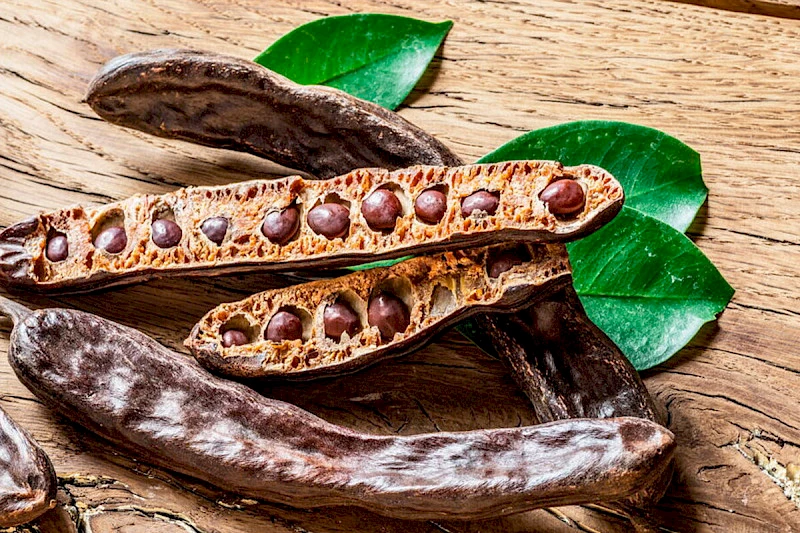
The pods are the most valuable part of the tree. They are sweet, dense, and turn dark brown when fully ripe.
They are used to produce:
- carob gum (E410) — a popular thickener,
- carob flour — a natural cocoa alternative,
- carob syrup, known in Cyprus as “carob honey”,
- food supplements and sweets,
- ingredients for baking and confectionery.
Cyprus actively exports carob gum — one of the island’s traditional products.
What is made from carob
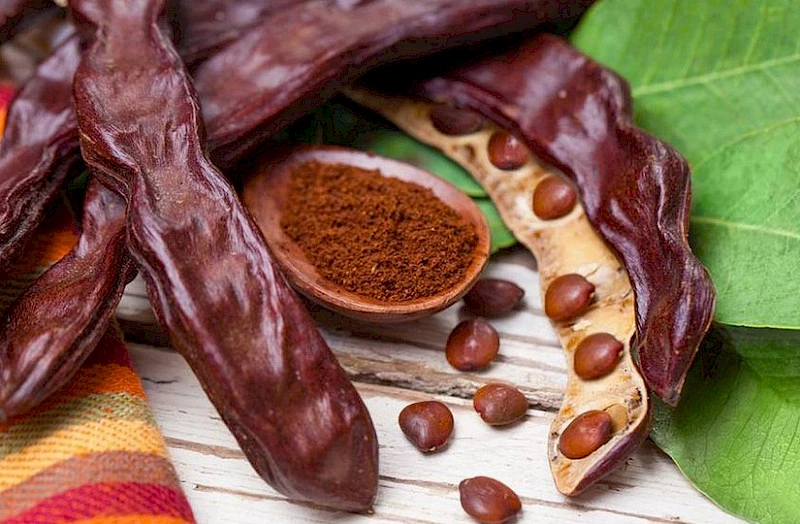
Carob is incredibly versatile. In Cyprus, it is used to make:
- Fresh pods eaten straight from the tree as sweet crunchy beans.
- Crushed seeds brewed with milk for a drink similar to hot chocolate.
- Carob pod tea which is naturally sweet without sugar.
- Ground seeds brewed like black tea — resulting in a rich, aromatic drink.
- Carob powder used in baking and desserts: cakes, cookies, homemade sweets.
- Carob syrup added to yogurt, porridge, and cocktails.
- Carob fruits used to make homemade zivania — a strong alcohol with mild sweet notes.
Benefits of carob
Although this is not medical advice, some well-known properties include:
- caffeine-free (unlike cocoa),
- naturally sweet,
- high in fiber,
- allergen-resistant,
- used in dietetic and vegan cuisine.
For these reasons, carob is increasingly used as a substitute for cocoa and sugar in healthy desserts.
When carob is harvested in Cyprus
Pods are harvested late summer to early autumn, when they are fully ripe and dark brown. Harvesting is done manually: pods are knocked down with long poles or collected from the ground after falling naturally.
The police control the harvest season because the crop has significant economic value, and illegal collection harms farmers.
Frequently Asked Questions about carob trees
Can you explain zivania from carob?
Classic zivania is made from grapes, but some artisans use various berries and fruits, including carob beans. We covered places where this drink can be purchased.
What do carob trees and diamonds have in common?
At first glance, nothing. But the carob tree gave the world one of the key concepts in the jewelry industry.
The Italian name for the plant — carato — is recognized by anyone interested in gems. The connection is simple: carob seeds have a remarkably consistent weight and were historically used as a natural weight standard.
Jewelers and traders used the seeds to measure gold, silver, and later precious stones.
This is how the modern carat — the unit of weight for diamonds and other gems — originated.
1 carat = 0.2 grams, roughly the weight of one carob seed.
Author

I am a person who is not afraid to change life when my heart tells me that something greater lies ahead. I am originally from Belarus. I have journeyed from pedagogical and economic education to the financial sector and many years of work in logistics — a world where everything moves, changes,…