Preschool education in the Republic of Cyprus
In the Republic of Cyprus, pre-school education covers nurseries and kindergartens for children starting from approximately 3 years of age, while compulsory pre-primary preparation for school depends on the academic year. For the 2026/2027 academic year, the mandatory entry age is 4 years and 4 months, though children from 3 years to 4 years and 4 months may also be enrolled if places are available. Main registration for public kindergartens for the 2026/2027 school year takes place from January 12–16, 2026, and the academic year itself begins in September. Public kindergartens for the compulsory pre-school stage are free, whereas younger groups and extended-day programs may involve monthly fees and separate costs for meals, insurance, and materials.
- From what age are children accepted into nurseries and kindergartens
- What types of kindergartens are available
- How much does pre-school education cost
- How the registration process works
- How to choose a kindergarten
- Useful materials on the topic
- Glossary
- Frequently Asked Questions
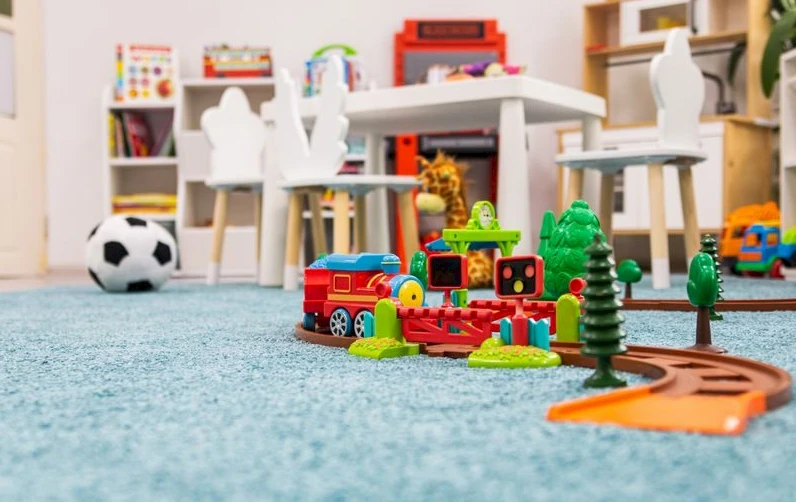
From what age are children accepted into nurseries and kindergartens
In everyday life, parents usually divide the pre-school stage into nursery and kindergarten. In practice, in the Republic of Cyprus, children can attend Nursery or junior groups from age 3 and then progress to the preparatory stage before school.
It is important to note that the age for compulsory pre-school education is changing in stages. For the 2024/2025 academic year, the compulsory stage began at 4 years and 6 months, while for 2026/2027, it starts at 4 years and 4 months. Children younger than this age may also be admitted if there are vacancies in a specific public or community kindergarten.
Previously, 4 years and 8 months was often used as a benchmark. Now, it is more accurate to always check the age requirements against the rules for the specific academic year.
Structure of the stages
- Nursery / junior pre-school group — usually for children from approximately 3 years old.
- Preschool / pre-primary — the preparatory stage before primary school.
- Entry into Grade 1 of primary school — from age 6, provided the child reaches the required age by September 1 of the corresponding year.
What types of kindergartens are available
In the Republic of Cyprus, there are three main categories of pre-school institutions: public, community, and private. All operate under the supervision of the Ministry of Education, Sport, and Youth, but they differ in management models, language of instruction, cost, and daily schedules.
Public Kindergarten
Public kindergartens are state-funded and follow a curriculum designed for future entry into Greek-speaking schools. Education is free for the compulsory pre-school stage. For children younger than the mandatory age, enrollment depends on vacancy availability and priority criteria.
Community Kindergarten
Community kindergartens are established by local communities, councils, parents' associations, or other non-profit entities and usually receive state support. These kindergartens often host groups for children aged 3 up to the compulsory pre-primary age. Fees depend on family income, the child's age, and attendance hours.
Private Kindergarten
Private kindergartens operate under the Private Schools Law of 2019. Opening such an institution requires approval and registration within the private education system. The language of instruction is most often Greek or English, but in the Republic of Cyprus, there are also Russian-speaking, French, and other international options.
Limassol has a higher concentration of Russian-speaking private kindergartens than most other cities in the Republic of Cyprus. These institutions often have daily routines and catering closer to what families from CIS countries are used to: hot meals, several feeding times, and afternoon naps.
Some British kindergartens operate within British schools. This is convenient for families planning their child's further education following the British curriculum.
How much does pre-school education cost
The cost depends not only on the type of kindergarten but also on the child's age, the length of the day, family income, and whether the institution participates in government subsidy schemes. Therefore, it is better to look at ranges rather than a single fixed amount.
| Type | Cost | Commentary |
|---|---|---|
| Public kindergarten, compulsory stage | 0 EUR | Education is free for compulsory pre-primary. |
| Public or community kindergarten, children from 3 years | approx. 42 EUR–160 EUR per month | Fees depend on attendance hours and the rules of the specific institution. |
| Private kindergarten, half day | approx. 130 EUR–200 EUR per month | The lower end usually applies to simpler local formats, the upper end to international programs. |
| Private kindergarten, full day | approx. 175 EUR–400 EUR per month | Costs are often higher in British and international kindergartens. |
| Premium segment private kindergarten | approx. 500 EUR per month and up | May include meals, stationery, extra activities, and extended hours. |
| Meals | approx. 2 EUR per day | In many kindergartens, meals are paid separately; some parents provide a lunch box. |
| Registration fee | approx. 100 EUR per year | More common in private kindergartens. |
| Insurance | up to 20 EUR per year | Usually a small separate payment. |
Additionally, some private institutions charge a non-refundable deposit if a family withdraws the child before the end of the academic year. This condition should be checked in the contract before payment.
Government Subsidies
The Republic of Cyprus has specific support schemes for families with pre-school children. For children under 4, the Tuition and Feeding Subsidy scheme may apply, and for the 2025/2026 academic year, a separate monthly subsidy was approved for children aged 4 to 4 years and 5 months in private and community kindergartens. Conditions depend on the child's age, type of kindergarten, and the parameters of the specific program for the academic year.
How the registration process works
In practice, families try to plan registration in advance. Formally, the main intake for the new academic year usually takes place in January, with attendance starting in September. For the 2026/2027 academic year, the state has announced a registration window of January 12–16, 2026.
Who is eligible for enrollment
Children living in the Republic of Cyprus have the right to register in a public kindergarten, regardless of citizenship and regardless of whether the parents are legal residents. For younger ages, where places are available, the residential address and local school zone are also taken into account.
How to do it
- Check if your address falls within the zone of a specific public or community kindergarten.
- Confirm the age criteria specifically for the required academic year.
- Submit an application during the announced January period or contact a chosen private kindergarten in advance if you are considering a private option.
- Prepare a basic document package: the child's birth certificate, the child's identification document, proof of address, ARC or other migration documents if necessary, and vaccination records.
- Clarify the daily routine, meals, after-school care, languages of instruction, and all additional payments before signing the contract.
Documents usually requested
- completed application form;
- child's birth certificate;
- child's passport or ID;
- proof of address in the Republic of Cyprus;
- ARC or other registration documents for third-country nationals, if applicable;
- vaccination card or medical documents, if requested by the specific institution.
How to choose a kindergarten
Before submitting documents, it is best to visit several kindergartens in person and speak with the administration and teachers. This is especially important if you are choosing between the Greek-speaking public system and a private international format.
What to look for during a visit
- language of instruction and adaptation for children who do not yet speak Greek;
- daily schedule and the time until which the child can stay;
- whether there is an afternoon nap;
- what is included in the meals and whether you can bring your own food;
- number of children in the group;
- whether there is preparation specifically for Greek or British schools;
- what additional fees are stipulated in the contract.
For families planning to integrate their child into the local system, a public or community kindergarten is usually more convenient. For families requiring English or Russian language, extended hours, and a more familiar meal format, private institutions are more frequently chosen.
Useful materials on the topic
- How to enroll a child in school in Cyprus
- What vaccinations are required for school enrollment
- Phone numbers and other school contacts in Cyprus
- The education system in the Republic of Cyprus
Glossary
- Nursery — a junior pre-school group or nursery for young children, usually before moving to the preparatory stage.
- Pre-primary education — the pre-school stage before primary school in the Republic of Cyprus; it is mandatory for certain ages.
- Community kindergarten — a kindergarten established by a local community or non-profit entity that operates under the supervision of the Ministry of Education.
- Private Schools Law 2019 — the Republic of Cyprus law regulating the establishment and operation of private schools, including private kindergartens.
Frequently Asked Questions
From what age can a child be sent to kindergarten in the Republic of Cyprus?
Usually from age 3. For the compulsory pre-school stage, the age depends on the academic year: for 2026/2027, it is 4 years and 4 months.
Is pre-school education compulsory?
Yes, the pre-primary stage before school is mandatory. However, the exact entry age must be checked according to the rules of the specific academic year, as the threshold is currently being lowered in stages.
Are public kindergartens free?
For the compulsory pre-school stage, yes. Fees may apply for children younger than the compulsory age and for specific attendance schedules.
Can a child be registered without the parents having a residence permit (VNZH)?
Yes. For public pre-school institutions, the key factor is the child's residence in the Republic of Cyprus, not the parents' migration status.
When does registration for public kindergartens begin?
The main intake usually occurs in January for the following academic year. For the 2026/2027 school year, registration is announced for January 12–16, 2026.
What should I choose: a public or private kindergarten?
If integration into the Greek school system and lower cost are important to you, a public or community kindergarten is more often chosen. If you need English or Russian language, an extended schedule, and a different meal format, a private kindergarten is more often chosen.
Do I need to pay for meals separately?
In many kindergartens, yes. Even if meals are offered, some parents prefer to give their child food in a lunch box.
Are there additional fees besides the main payment?
Yes, in private kindergartens, there is often a registration fee, small insurance payment, costs for materials, and sometimes a deposit in case the child leaves prematurely.
Author

I am a person who is not afraid to change life when my heart tells me that something greater lies ahead. I am originally from Belarus. I have journeyed from pedagogical and economic education to the financial sector and many years of work in logistics — a world where everything moves, changes,…
You may also be interested in:
- Summer schools in the Republic of Cyprus in 2026: dates, schedule, and how to enroll a child
- Required vaccinations for primary school enrollment in the Republic of Cyprus
- How to pay for education and courses in the Republic of Cyprus online
- Phone numbers and school contacts in the Republic of Cyprus
- How to enroll a child in school in the Republic of Cyprus in 2026