
Cyprus economy at a crossroads: Growth, risks, and future scenarios
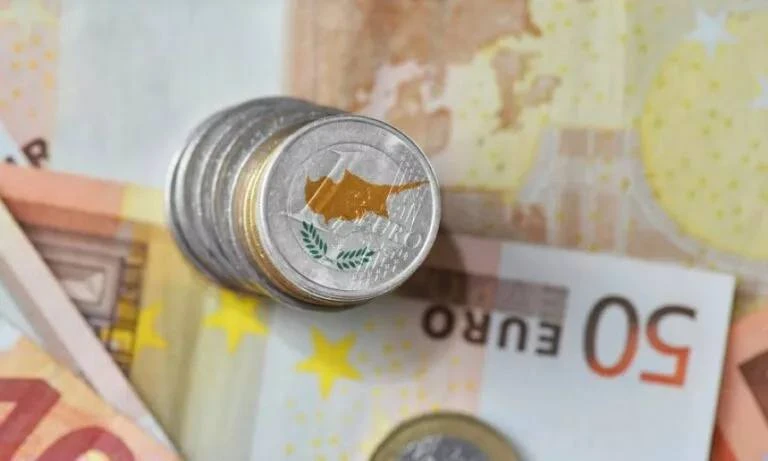
The Cypriot economy enters 2026 with moderate optimism — but also with a notable degree of anxiety. While authorities, European institutions, and rating agencies build their forecasts, an equally important picture is formed by banks: they are the ones working with several scenarios for the future — from stable growth to a tangible downturn in the Republic of Cyprus. And these scenarios are diverging today more than ever in recent years.
What is the GDP growth forecast for Cyprus in 2026?
According to the base scenario of the Bank of Cyprus, the island's economy will grow by 2.6%, while inflation will return to a similar level of 2.6% after near-zero figures in 2025. This forecast assumes continued economic growth, albeit without sharp accelerations.
The real estate market, which has experienced a significant rise in recent years, is expected to stabilize: prices will grow by approximately 2.5%. This is no longer a boom, but not a slump either — rather, a transition to more sustainable dynamics.
The key feature of the current stage is a combination of multi-directional factors:
- Decreasing interest rates and slowing inflation support business activity.
- Geopolitical tensions continue to weigh on global trade.
- The development of artificial intelligence is seen as a new force capable of supporting international trade and investment.
Vulnerability of the island economy
However, even in the base scenario, analysts emphasize: Cyprus remains sensitive to external shocks. The country's economy relies heavily on service exports — tourism, international business, and the IT sector. This makes it more dependent on the global situation than economies with a developed industrial base.
That is why any disruptions in world trade or a decrease in demand from external markets quickly reflect on domestic dynamics.
What are the economic risks in Cyprus?
The main threats to the island's economy remain trade wars, rising inflation expectations, and a sharp jump in yields on financial markets. If a negative scenario materializes, the Cypriot economy could enter a recession: a GDP fall of 5.1% in 2026 and another 2.3% in 2027.
In such a development, unemployment will rise to 8% and then decrease slightly but remain elevated. The most alarming signal is a transition to deflation (a price decrease of 1.4%), which often indicates weak demand and slowing activity. The real estate market in such a scenario also begins to decline following the general conjuncture.
Optimistic variant: Acceleration due to external factors
However, there is a more positive trajectory. Given a favorable international environment, Cyprus could accelerate: GDP growth of up to 4.1% in 2026. Unemployment would remain at a low level — about 4.1%.
However, such growth is accompanied by higher inflation — up to 3.4%, which could become a new norm in an active economy. Real estate in this scenario becomes a driver again: prices could rise by nearly 4%.
The view from other banks: Cautious optimism
Assessments from other major banks generally confirm this "fork of scenarios," although details vary.
The Eurobank group sees average annual GDP growth in 2026–2029 at:
- 4.04% — in an optimistic scenario;
- 3.11% — in the base case;
- just 0.70% — in an adverse one.
Alpha Bank, in turn, estimates the growth potential even higher — up to 5.6% in a positive scenario on the 2025–2027 horizon. Но here too the spread is significant: in an unfavorable variant, growth almost stops — only 0.4%.
What this means in practice
The main conclusion from banking forecasts is high uncertainty. The Cypriot economy is not in a crisis, but it is not insured against one. Its future depends largely not so much on internal decisions as on the global environment.
For business, this means the need for flexibility and readiness for different scenarios. For the state — the importance of diversifying the economy and reducing dependence on external factors. And for ordinary citizens — that the current stability in Cyprus may turn out to be either the start of new growth or a temporary lull before a more difficult period.
Brief conclusions:
- The base forecast promises moderate GDP growth of around 2.6%.
- There is a risk of recession up to 5.1% under a negative global scenario.
- The IT sector and tourism remain key but vulnerable pillars of the economy.
- The real estate market shows stability but is extremely sensitive to external shocks.
Author

Born in the city of shipbuilders, Mykolaiv (Ukraine). Currently living in Moscow. Diplomat in reserve. More than 10 years of experience in the Mediterranean region (Greece, Cyprus). Until 2015, First Secretary of the Russian Embassy in Cyprus. Fluent in Greek and English. Completed civil service in…
