
Cyprus strengthens defense: what has already been done during the EU presidency
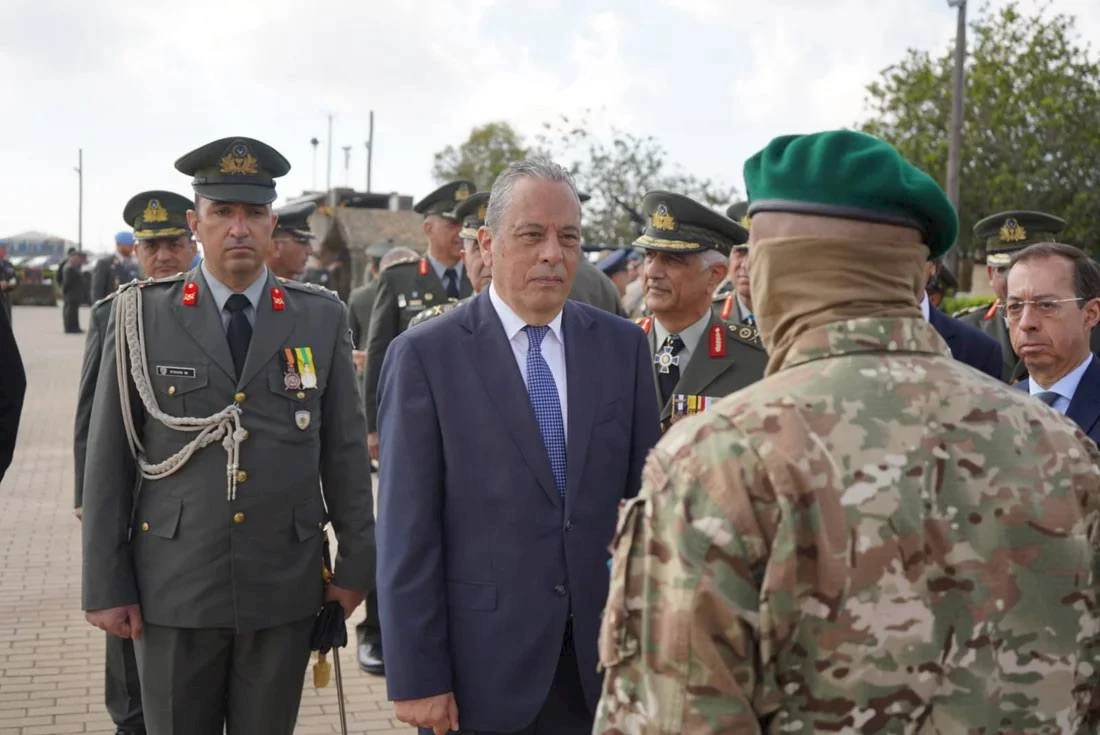
The Republic of Cyprus is using its presidency of the Council of the EU not only to formulate priorities but also to practically advance the defense agenda. Amid instability in the Eastern Mediterranean, the country is focusing on concrete steps — from infrastructure modernization to expanding international partnerships. Deepening cooperation with key regional and European players, including Israel and France, is of particular importance, strengthening security in Cyprus in the long term.
How is national security in Cyprus ensured today?
Security on the island is ensured through the development of the National Guard, which is a central element of deterrence and protection of sovereignty. Minister of Defense Vasilis Palmas emphasizes that during the presidency, special attention is paid to practical measures:
- maintaining high combat readiness;
- improving the level of personnel training;
- implementing modern approaches to military command and control.
This allows Cyprus not only to respond to threats but also to integrate into broader EU defense mechanisms.
Reaction to the changing security environment
Recent events, including Ukraine, the conflict in Gaza, and tensions surrounding Iran, have already influenced Nicosia's specific decisions. Within the framework of the presidency, Cyprus is strengthening the focus on EU operational readiness, supporting the development of technological solutions in defense, and promoting rapid crisis response mechanisms.
Infrastructure projects: preparation with allies in mind
Although the modernization of the Evangelos Florakis Naval Base and the Andreas Papandreou Air Base is planned for 2027, active preparation is already underway. The feature of the current stage is the orientation towards the use of infrastructure by partners and allies. In particular:
- facilities are viewed as platforms for joint operations;
- coordination with partners on access and logistics issues is ongoing;
- their significance is reinforced in the context of EU operations and partner missions.
The modernization of key facilities is turning the Republic of Cyprus into a potential regional security hub for all of Europe.
What military alliances is the Republic of Cyprus developing?
The Republic of Cyprus is actively diversifying its defense ties, supplementing its traditional partnership with Greece with new strategic alliances. Cooperation with Israel is becoming increasingly practical, including joint military exercises, exchange of security experience, and interaction in the field of monitoring. For the island, this is critically important given its proximity to zones of instability.
France as a key European partner
Interaction with France, which plays a prominent role in ensuring security in the Mediterranean, is also intensifying. Cooperation includes:
- military presence and use of infrastructure;
- participation in joint EU initiatives;
- coordination on maritime security issues.
Concrete contribution to the EU defense agenda
Cyprus is already implementing a number of initiatives at the European Union level. Among them are the promotion of projects within PESCO, a focus on maritime security, and the use of European Defense Fund opportunities. This allows the country to act as a link between the EU and the Eastern Mediterranean.
The Turkey factor and regional risks
Turkey's presence in part of the island's territory remains a key factor in defense policy. In these conditions, the importance of deterrence increases, and the role of alliances grows. However, the intensification of defense policy inevitably provokes a reaction: Turkey traditionally views the strengthening of Cyprus's military cooperation with France and Israel with caution.
Multi-vector policy requires Nicosia to balance interests between the EU and regional partners, as well as between military strengthening and the need to avoid excessive militarization of the region. There are also internal constraints — primarily limited resources requiring project prioritization.
Cyprus as an emerging security hub
Cyprus demonstrates a transition from declarative policy to practical steps. The EU presidency is effectively used to strengthen military infrastructure and expand the network of alliances. Despite existing risks, the country is gradually becoming an important security hub in the Eastern Mediterranean — both for the European Union and for regional partners.
Key takeaways:
- Infrastructure: Preparation for base modernization for the needs of EU allies.
- Partnerships: Deepening strategic ties with France and Israel.
- European integration: Active participation in PESCO projects and EU defense funds.
- Geopolitics: Transformation of the island into a key security hub in the Eastern Mediterranean.
Author

Born in the city of shipbuilders, Mykolaiv (Ukraine). Currently living in Moscow. Diplomat in reserve. More than 10 years of experience in the Mediterranean region (Greece, Cyprus). Until 2015, First Secretary of the Russian Embassy in Cyprus. Fluent in Greek and English. Completed civil service in…
You may also be interested in:
- Accident on Nicosia—Limassol highway: right lane closed near Monte Caputo
- Kiti village to host the 7th Artichoke Festival
- LARNACA TO HOST INTERNATIONAL CULTURE NEXT CONFERENCE
- Foot-and-mouth disease outbreak in Cyprus called unprecedented
- Cyprus economy in 2025: an island of stability amidst European imbalances
