
Strait of Hormuz: Why the Middle East Energy Crisis Could Hit Cyprus and the Global Economy
When it comes to global energy security, expert attention is almost always focused on major power economies—the US, China, and Europe. However, sometimes it is small countries that best demonstrate how vulnerable the modern energy system is. Cyprus is one such example.
At first glance, the island is far from the Persian Gulf and the Strait of Hormuz. But in practice, any turmoil in this narrow sea corridor is reflected almost instantly in the energy security of Cyprus—and through it, becomes a clear indicator of the state of the global economy.
Energy Island
Cyprus remains one of the most vulnerable countries in Europe from an energy perspective. It is often called an "energy island," and this is not a metaphor.
The island is almost entirely dependent on imports of petroleum products. The only refinery in Cyprus was closed back in 2004, after which the country switched to a model of full fuel importation.
Today, gasoline, diesel, and fuel oil arrive on the island by sea. The main suppliers remain Greece, Israel, Spain, Italy, as well as countries in North Africa and the Middle East. Fuel is unloaded through the ports of Limassol and Larnaca, with the Vasilikos terminal considered the key energy hub.
At the same time, the energy system of Cyprus is isolated from mainland Europe—the island is not connected to the pan-European power grid. This means that in the event of a crisis, it is impossible to quickly compensate for electricity shortages through imports from other countries.
Strategic fuel reserves exist on the island, but they are designed for approximately 60 days of economic functioning. In other words, if external supplies are disrupted, Cyprus can survive without them for about two months.
Solar energy is developing quite actively, but it is not yet capable of replacing traditional thermal power stations. The main problem is the lack of large-scale energy storage systems and the need to ensure stable operation of the power system at night.
Thus, Cyprus remains extremely sensitive to any shocks in the global energy market.
The Bottleneck of Global Energy
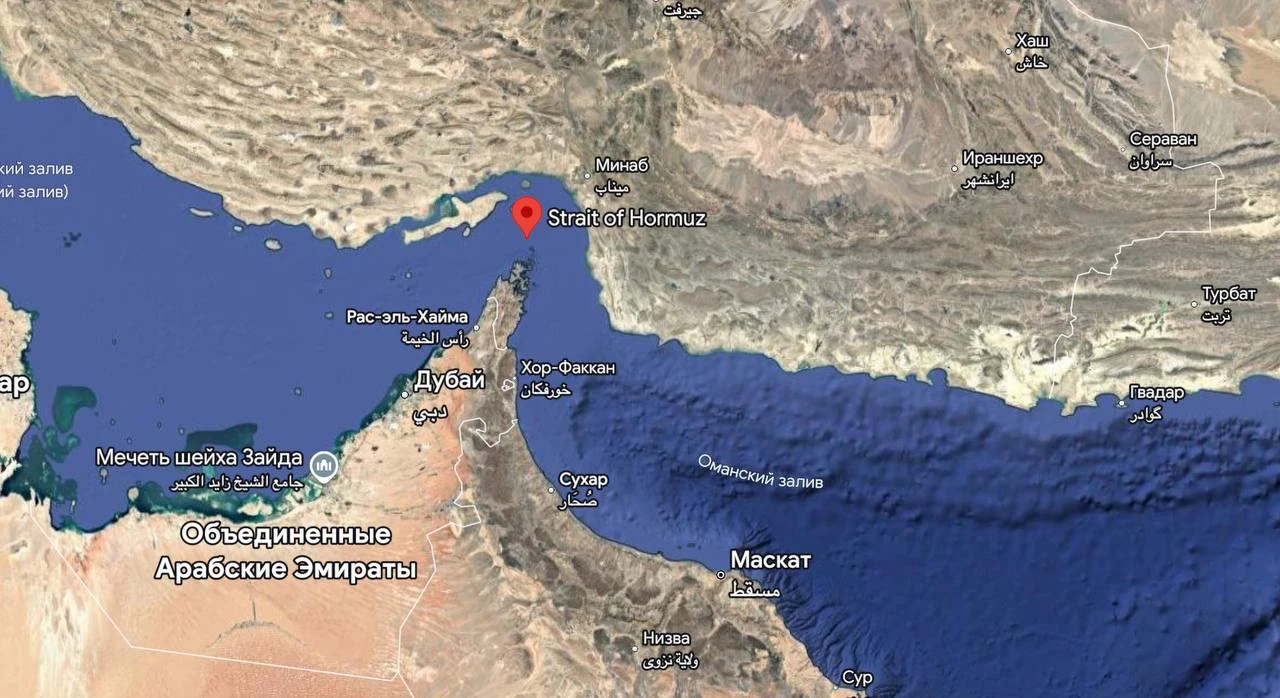
One of the most vulnerable elements of the global energy system remains the Strait of Hormuz—a narrow sea corridor between Iran and Oman, connecting the Persian Gulf with the Indian Ocean.
Its importance cannot be overstated. Through this strait passes:
about 20–21% of global oil consumption
approximately a quarter of all liquefied natural gas (LNG) supplies
In fact, this is the main export route for Persian Gulf countries: Saudi Arabia, Qatar, Kuwait, Iraq, and the United Arab Emirates.
Any problems with shipping security in this area are instantly reflected in world markets.
Even temporary restrictions can cause a rise in energy prices, logistical disruptions, and increased inflationary pressure on the global economy.
Hidden Blockade
At the same time, a blockade of the Strait of Hormuz can occur even without a formal closure of shipping.
One of the key factors is the position of insurance companies. Maritime transport in a high military risk zone requires special insurance coverage. If insurance companies refuse to insure vessels and cargo, shipping effectively stops.
In global maritime logistics, a simple rule applies: no insurance — no shipping.
Therefore, even limited military threats can lead to self-limitation of transit. Tanker companies are simply not ready to send vessels to an area where insurance coverage is unavailable.
In such a situation, the issue of shipping security becomes not only a military but also a financial problem. Without guarantees of transit protection, the insurance market will not return to the region.
Who Will Suffer First
Disruptions in the Strait of Hormuz will hardest hit countries that depend on oil and gas imports from the Persian Gulf.
Primarily, this is China—the world's largest oil importer. About 40% of its supplies pass through this strait.
Any restrictions can slow down the country's industry, and consequently, global production chains.
A serious blow will be dealt to India, which purchases about 60% of its oil from Gulf countries.
Japan and South Korea remain very sensitive to such crises, importing more than 80% of their oil through the strait.
The European Union is also in the risk zone. After reducing dependence on Russian energy resources, Europe significantly increased LNG imports from Qatar. In the event of supply disruptions, the gas market could face a serious deficit.
Developing countries with unstable currencies will find it especially difficult. For them, a sharp rise in oil prices means a direct threat of fuel shortages and social unrest.
How Much Time Does the Global Economy Have
The modern energy system has a certain margin of safety, but it is limited.
International Energy Agency member countries are required to maintain strategic oil reserves equivalent to approximately 90 days of net imports.
Theoretically, this allows the global economy to withstand several months of crisis. However, in practice, the use of reserves is accompanied by a sharp rise in prices.
Furthermore, alternative supply routes can compensate for only less than a quarter of the volumes that pass through the Strait of Hormuz.
The LNG market remains the most vulnerable. Gas cannot be as easily compensated from strategic reserves as oil.
According to expert estimates, the global economy can relatively sustainably withstand serious disruptions in Hormuz for about two to three months.
After that, fuel shortages and rising prices could lead to a large-scale recession.
Is a Price Hike Inevitable
Even the expectation of a prolonged crisis can sharply raise the cost of energy resources.
Markets begin to factor in risks in advance. If the problem of free passage through the Strait of Hormuz is not resolved in the coming weeks, oil prices could rise above $120–150 per barrel.
Simultaneously, the cost of LNG and maritime logistics will rise sharply.
For the global economy, this means a new round of inflation and a reduction in industrial production.
Why This Matters for Cyprus
For Cyprus, what is happening is not just a geopolitical crisis somewhere far away. It is a direct challenge to national energy security.
The current situation clearly shows how vulnerable the country is due to its complete dependence on fuel imports.
Therefore, for the future government and the new parliament, the issue of energy security must become one of the key priorities.
This primarily concerns several strategic projects:
completion of the electrical interconnector with Europe
development of LNG reception infrastructure
acceleration of offshore gas field development
diversification of fuel sources.
Without these steps, Cyprus will continue to remain extremely dependent on global energy crises.
The Countdown
The Strait of Hormuz has long been considered one of the main geopolitical "bottlenecks" of the global economy. Any disruptions in its operation are instantly reflected in global markets.
If the crisis lingers, rising energy prices could trigger a new wave of economic instability.
In essence, this is not just about shipping security in one strait. It is about the stability of the entire global energy system.
And in this sense, one can say that the countdown has already begun.
Author

Born in the city of shipbuilders, Mykolaiv (Ukraine). Currently living in Moscow. Diplomat in reserve. More than 10 years of experience in the Mediterranean region (Greece, Cyprus). Until 2015, First Secretary of the Russian Embassy in Cyprus. Fluent in Greek and English. Completed civil service in…
You may also be interested in:
- Teenagers detained in Nicosia in stolen car: knives and drugs found in vehicle
- Cyprus resident loses €10,000 to SMS scammers
- Cyprus police seize firewood for Easter bonfires
- Missile debris damages Cyprus embassy building in Tel Aviv
- Additional measures ready in Cyprus due to Middle East war — President
