
Which mushrooms are collected in Northern Cyprus
In Northern Cyprus, mushrooms are usually harvested in the autumn after the first rains, while morels appear in the spring (typically in April for about three weeks). The most commonly found mushrooms are saffron milk caps and slippery jacks, with porcini being less frequent; other collected types include the dry milk mushroom (white russula), morels, oyster mushrooms, and occasionally truffles (usually in November–December). If you are not 100% certain of a mushroom species, it is better not to pick it, and when foraging, it is important to be aware of the risk of encountering snakes.
Mushroom Foraging Rules
We have created a detailed guide in a separate article.
Edible Mushrooms in Northern Cyprus
Slippery Jacks

The common species of slippery jack in Northern Cyprus is Suillus granulatus: it grows in groups, usually under conifer trees such as pines and cedars. The cap is convex or flat, often slimy and sticky to the touch, with a color ranging from yellow-brown to reddish-brown. The hymenophore (the part under the cap) is tubular. The flesh is white or yellowish, and its color usually does not change when cut.
Saffron Milk Caps
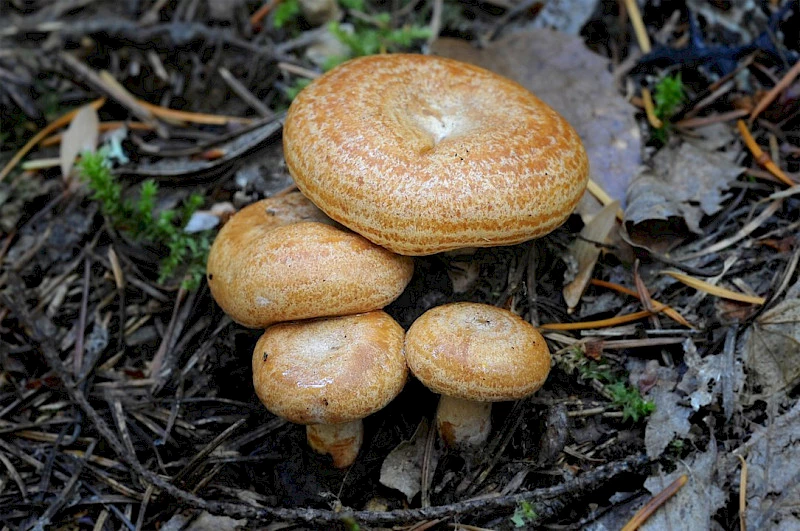
One of the most popular mushrooms among locals. Found in groups in conifer forests, grass, and moss. The cap is bright orange with a central depression; as it ages, it becomes more funnel-shaped. The hymenophore is gilled. The flesh is yellow-orange and firm; the latex may turn green on a fresh cut. Saffron milk caps are sometimes confused with the pink milk cap, which has white latex and a heavily velvety cap.
Porcini

Porcini belong to the Boletus genus and are considered one of the most valuable edible mushrooms. The name comes from the fact that the flesh usually does not change color when cut. In Europe, they are commonly found, but in Northern Cyprus, they are rarer — mainly in the mountains and oak groves.
Dry Milk Mushroom
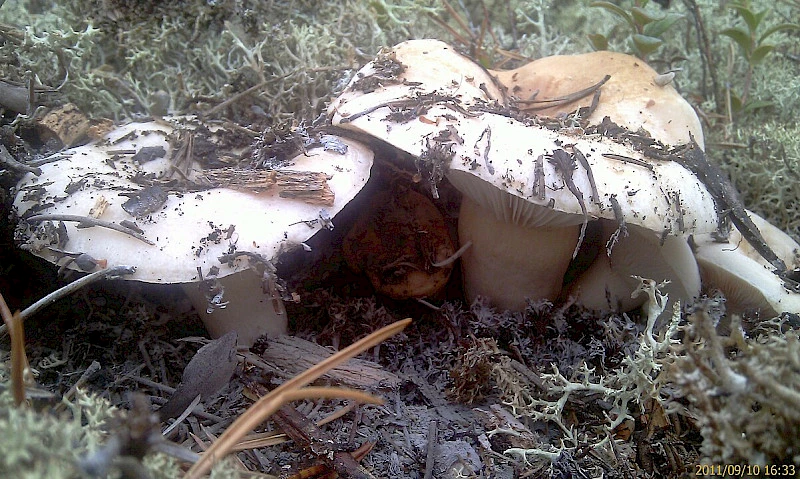
Also known as the white russula. Despite its name, it belongs to the russulas, not the milk mushrooms. A popular mushroom in Northern Cyprus, it appears in the same locations as saffron milk caps but slightly earlier.
Morels
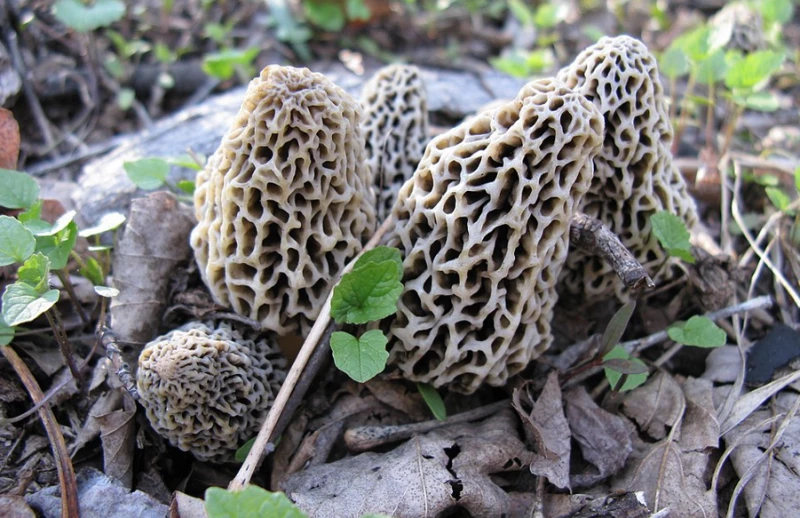
A mushroom of unusual but memorable shape. Found on uncultivated land, open areas after fires, or burnt patches. It is considered conditionally edible because it is usually boiled for 10–15 minutes before consumption.
Oyster Mushrooms
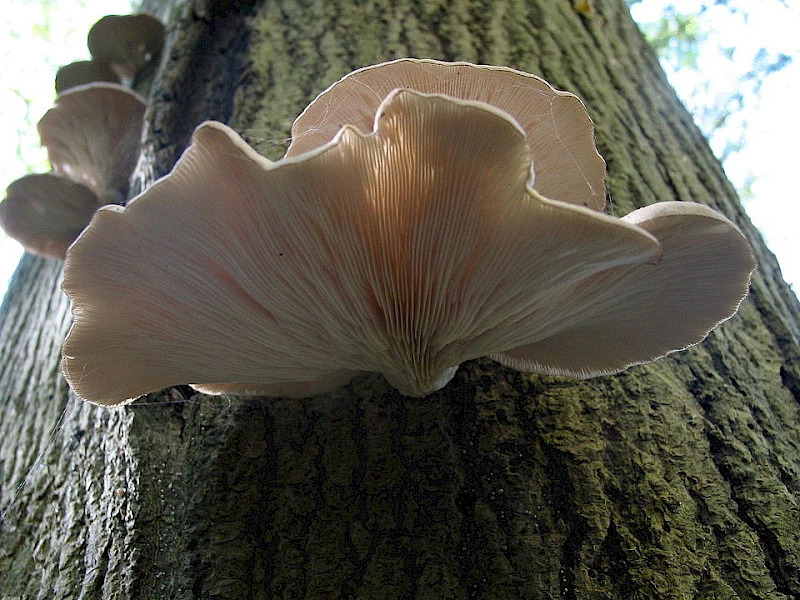
A popular mushroom in Northern Cyprus, frequently used in local cuisine. Appears in spring among heather bushes, as it can grow on the roots of this shrub.
Truffles
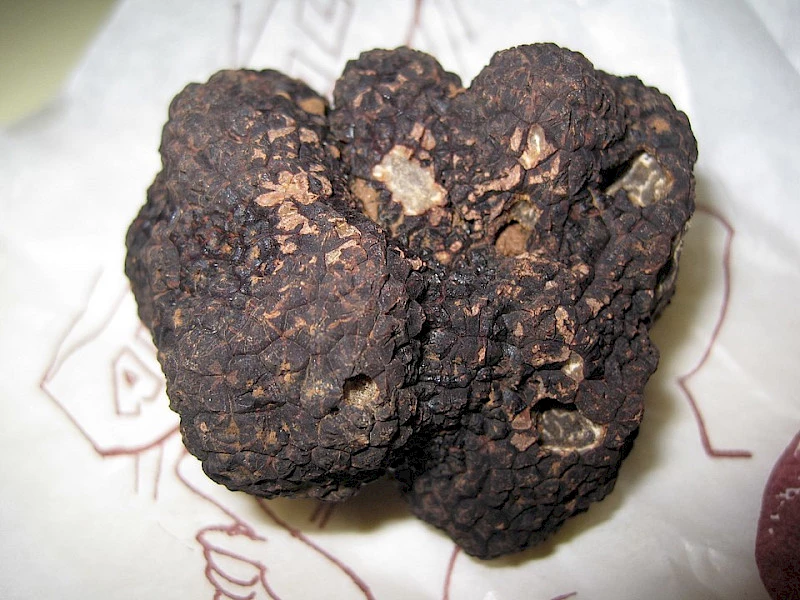
Truffles are also found on the island but are difficult to locate: they grow underground or under leaf litter. They are usually sought with specially trained dogs in November–December.
Glossary
- Edible Mushrooms — mushrooms that can be consumed after standard culinary preparation.
- Conditionally Edible Mushrooms — mushrooms that can only be eaten after proper preliminary treatment (e.g., boiling) to reduce the risk of poisoning.
- Hymenophore — the spore-bearing layer under the mushroom cap; can be tubular (as in slippery jacks) or gilled (as in saffron milk caps).
- Latex — the juice that exudes from some mushrooms (e.g., saffron milk caps) when cut; its color helps distinguish similar species.
- Mushroom Lookalikes — visually similar species, which may include inedible or poisonous varieties; if in doubt, foraging should be stopped.
Frequently Asked Questions
When does the mushroom season start in Northern Cyprus?
The main season generally begins in the autumn after the first rains. Morels appear in the spring — usually in April for about three weeks.
Which mushrooms are most commonly collected in Northern Cyprus?
Saffron milk caps and slippery jacks are most commonly collected. Porcini, dry milk mushrooms (white russula), morels, oyster mushrooms, and occasionally truffles are also found.
How many mushroom species are on the island?
Experts claim there are more than a thousand species, but it is impossible for an ordinary person to identify and classify them all.
Are there poisonous mushrooms in Northern Cyprus?
Yes, there are poisonous species and dangerous “lookalikes” of known edible mushrooms. If there is the slightest doubt, it is better to refrain from collecting; basic warnings and examples of potential risks are provided in the material Mushroom Foraging Rules in Northern Cyprus.
Do you need any permits to collect mushrooms?
In practice, foraging is usually considered recreational, but if there are any doubts regarding local regulations (private land, protected areas), it is advisable to check access rules on site.
Where is it better not to collect mushrooms in Northern Cyprus?
If an area looks polluted (road edges, dumps, areas with garbage), it is better to avoid foraging there. Also, consider the local wildlife: during the mushroom season, snakes may be encountered in nature.
Subscribe to our Telegram channel about life in Northern Cyprus to learn useful and interesting facts about this part of the island.
Author

I am a person who is not afraid to change life when my heart tells me that something greater lies ahead. I am originally from Belarus. I have journeyed from pedagogical and economic education to the financial sector and many years of work in logistics — a world where everything moves, changes,…